Solar Wine Cellar ABC Solar Incorporated
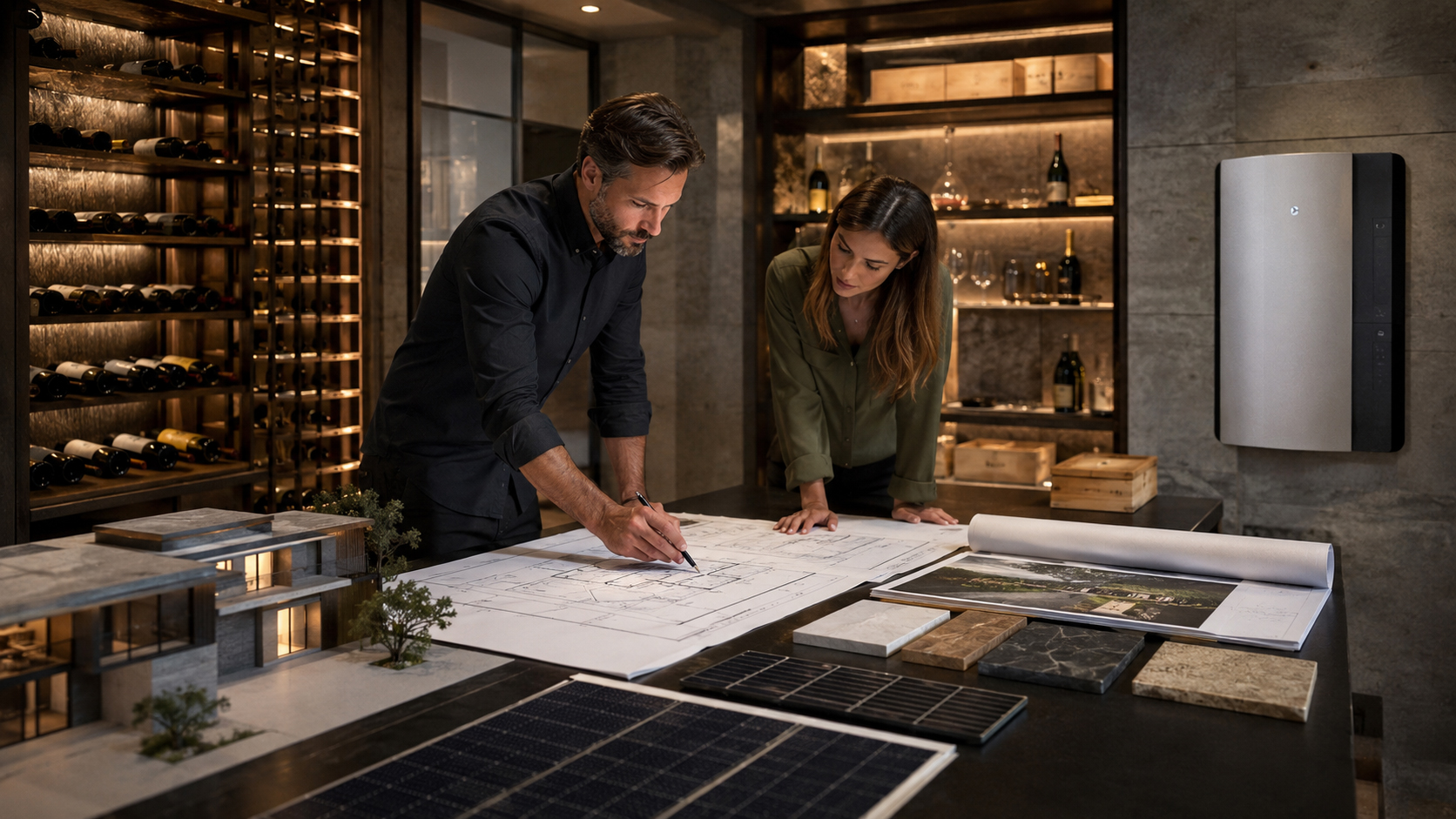
Architect and builder reviewing luxury solar wine cellar plans
Design Process

Most of the year, or winter?

That is the honest first question. ABC Solar designs Solar Wine Cellar systems around real loads, real seasonal production, real battery expectations, and the customer’s tolerance for risk.

The Premise

Solar design is not one season. It is a year of consequences.

A wine cellar does not care that the system worked beautifully in May. The question is what happens when solar production is lower, the outage lasts longer, and the bottles are still depending on the equipment.

Choice One

Design for most of the year.

This is the practical, elegant, cost-aware design path. It is built for typical outages and the months when solar production is generally stronger.

  • Good fit for many private wine rooms and restaurants.
  • Balances budget, battery capacity, and backup expectations.
  • Protects selected critical loads without pretending every month is winter.
  • Best when the customer wants meaningful protection with disciplined scope.
Choice Two

Design for winter.

This is the premium resilience standard. It plans around shorter days, weaker solar production, storms, cloudy weather, and longer outage exposure.

  • Best for very valuable collections and outage-sensitive properties.
  • May require more solar, more battery, or stricter load control.
  • Often appropriate for remote estates, storage facilities, wineries, and high-risk sites.
  • Can include generator integration where long-duration resilience is required.
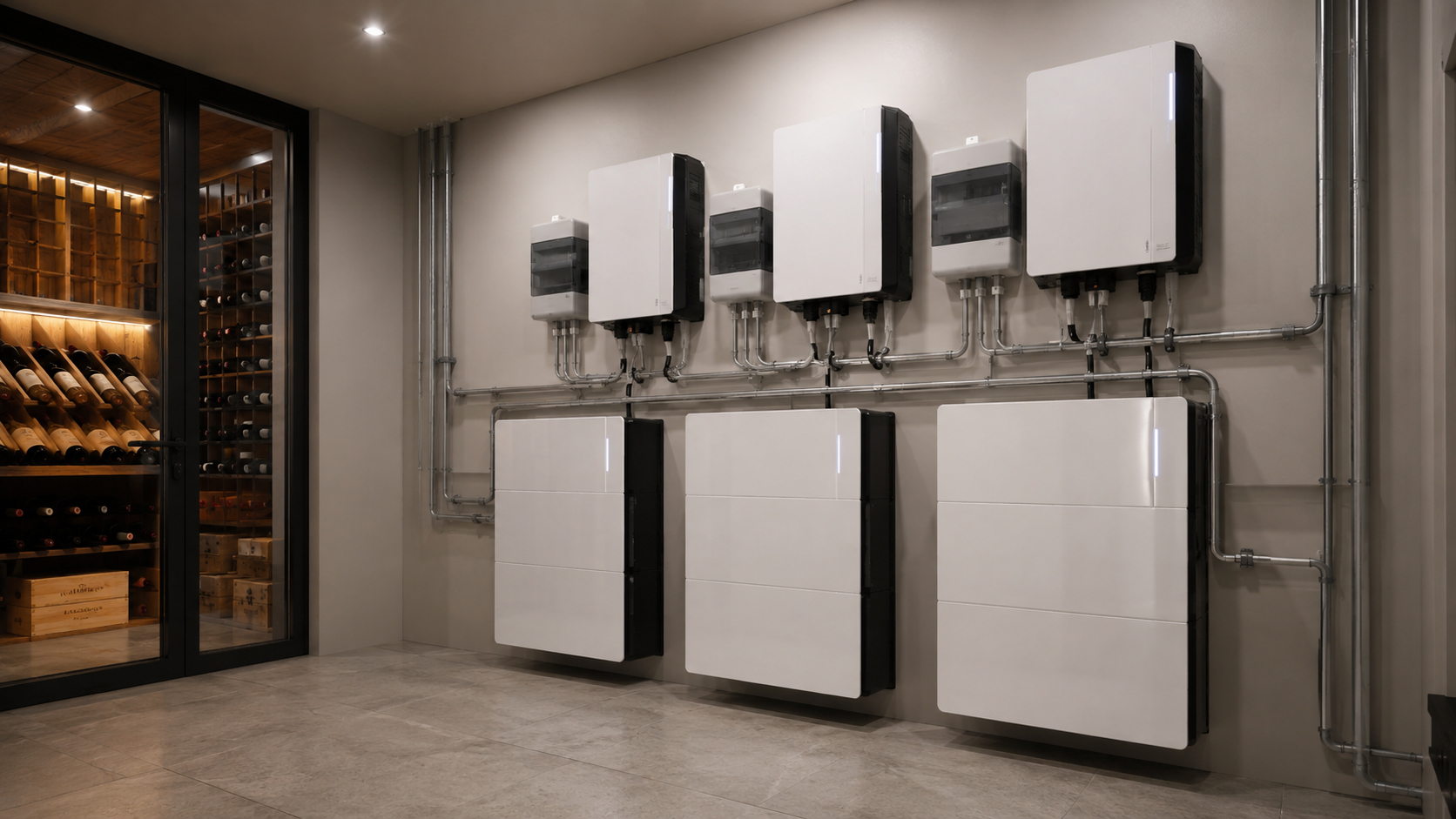
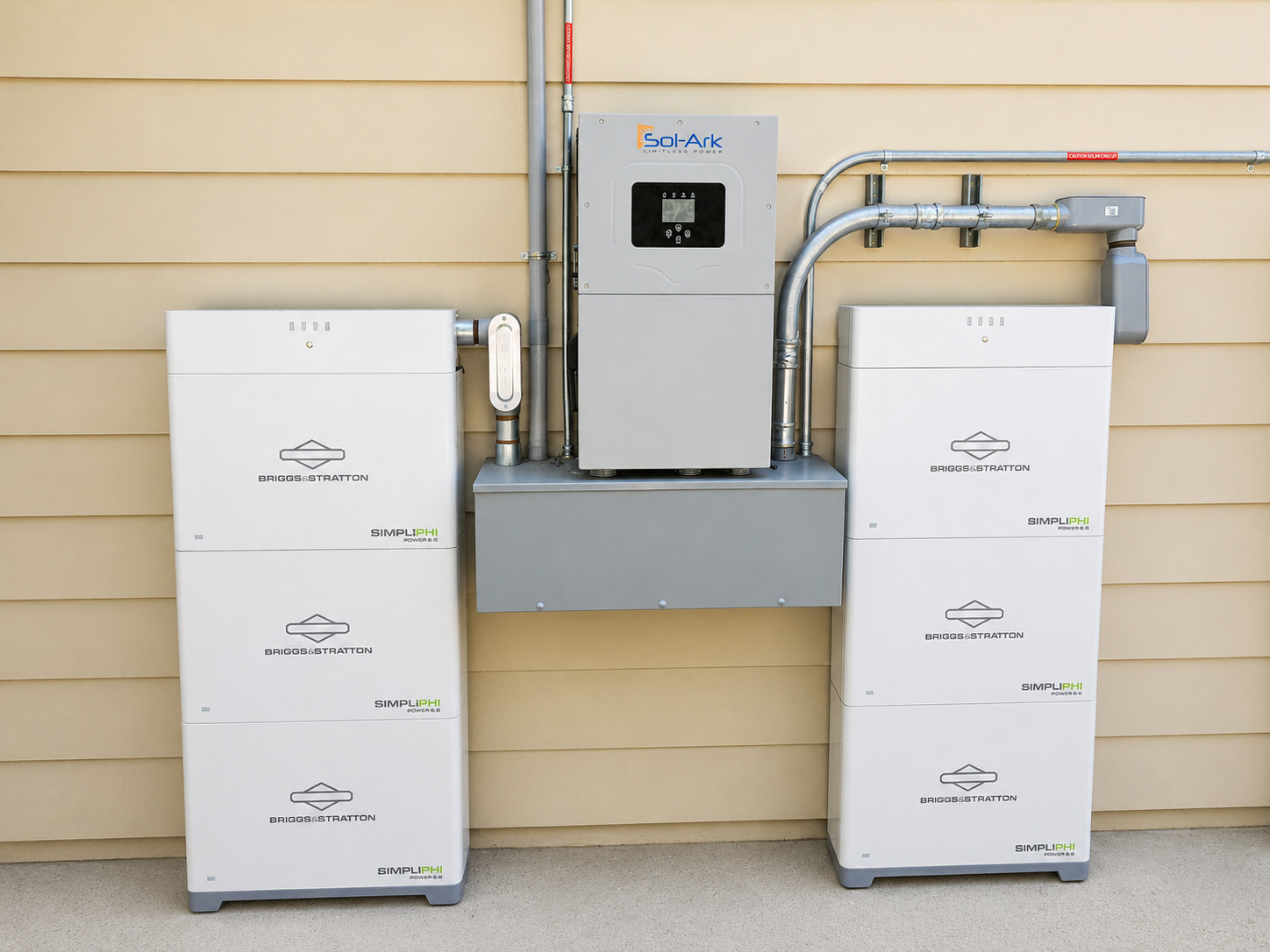
Actual ABC Solar installation with Sol-Ark inverter and Briggs & Stratton SimpliPHI batteries
Actual ABC Solar Installation

The design standard comes before the equipment quote.

ABC Solar uses premium Sol-Ark inverter systems and Briggs & Stratton / SimpliPHI battery storage. But the right design does not begin with a product. It begins with the question: what must stay powered, and under what season?

A Sol-Ark system can be powerful. Briggs & Stratton storage can be modular and serious. But the system is only as good as the load discipline behind it.

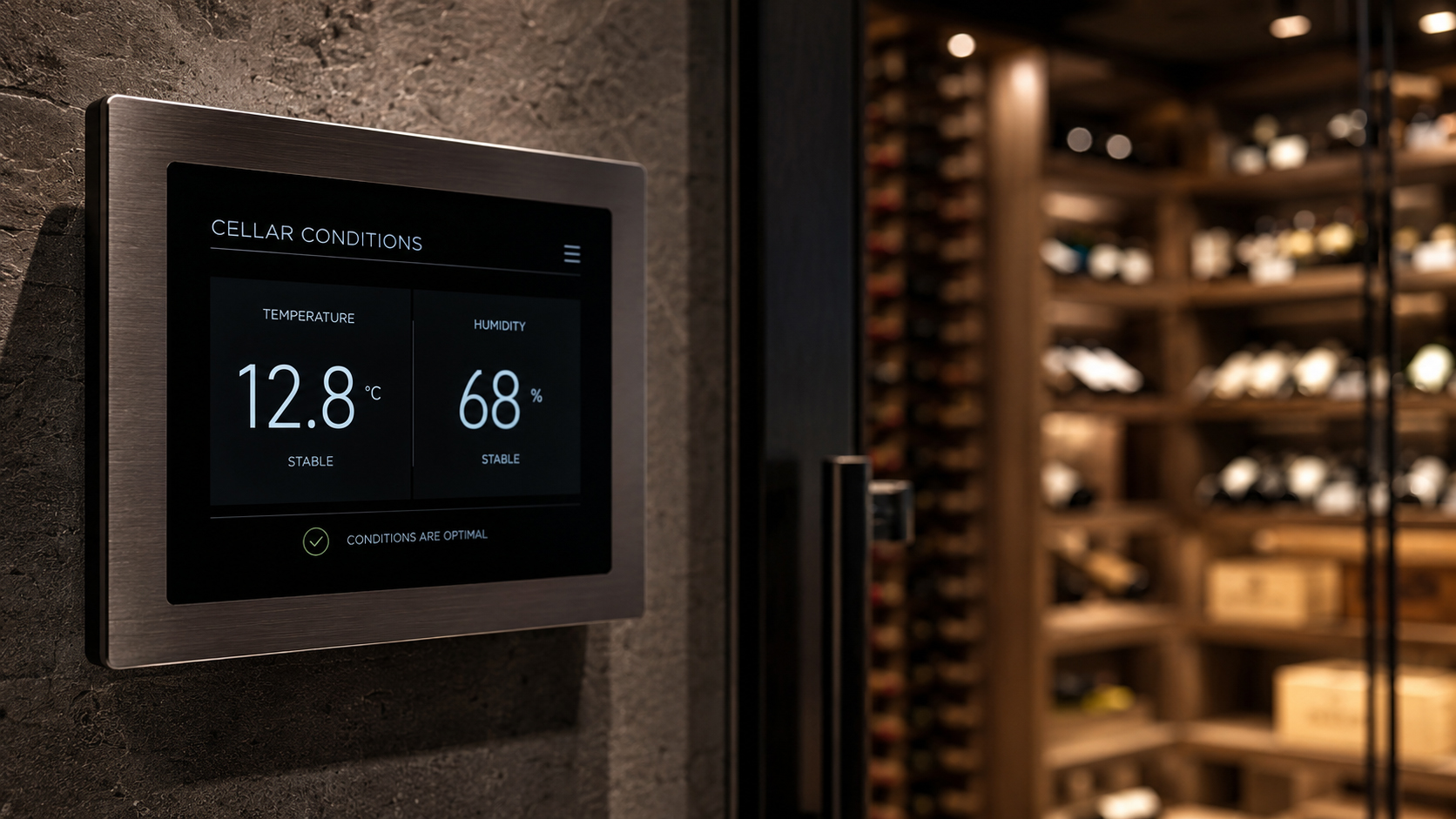
Wine cellar temperature and humidity display
The Scoreboard

The cellar temperature tells the truth.

The equipment, the battery, the inverter, the solar, and the monitoring all serve one quiet goal: keep the wine out of danger.

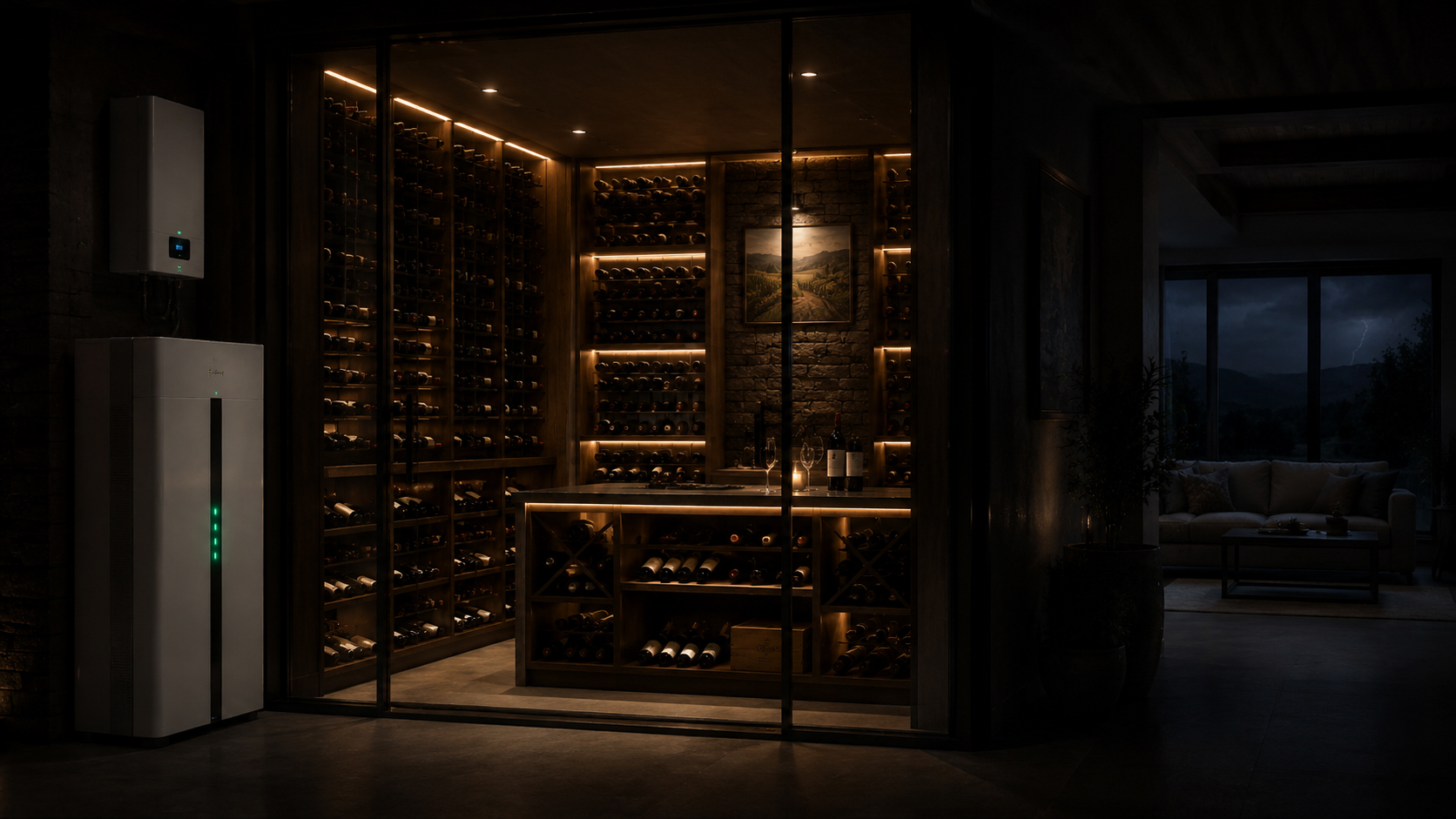
Wine cellar protected during a power outage
The Failure Test

The outage is not when design begins.

By the time the grid fails, the important decisions should already be made: what stays on, what stays off, and how long the system is expected to carry the load.

The ABC Solar Sequence

Design backward from the consequence.

We do not start with a wish list. We start with the failure point.

Step 01

Identify the protected loads.

Wine-cellar cooling, controls, temperature monitoring, network, security, lighting, refrigeration, gates, and selected critical circuits.

Step 02

Choose the season standard.

Decide whether the system is designed for most of the year or designed more conservatively for winter.

Step 03

Size the architecture.

Review solar capacity, Sol-Ark inverter architecture, Briggs & Stratton battery capacity, protected-load panels, and site constraints.

Step 04

Explain the limits.

The owner should understand what is protected, what is not, what happens in winter, and how the system behaves during long outages.

Load Discipline

The more loads you add, the larger the truth becomes.

A cellar-only design is different from an estate design. A restaurant wine wall is different from a winery. A commercial storage facility is different from a private home.

Every additional circuit affects runtime, inverter capacity, battery size, solar recharge, cost, and winter resilience. The best systems are not vague. They are disciplined.

Clean solar battery and inverter installation
Comparison

Two standards. Two very different conversations.

Design Question Most-of-Year Design Winter Design
Design philosophy Practical protection for typical outages and stronger solar months. Premium resilience for the hardest season and weaker solar production.
Best customer fit Private wine rooms, restaurants, and properties seeking meaningful backup with controlled scope. High-value collections, remote estates, storage facilities, wineries, and outage-prone sites.
Solar array implication Often balanced around available roof, budget, and normal seasonal production. May require more solar area to compensate for shorter days and weaker conditions.
Battery implication Sized around selected critical loads and realistic typical outage expectations. May require larger battery capacity or stricter load selection.
Generator discussion Optional depending on customer expectations and outage history. Often worth discussing for long-duration winter resilience.
Best sales line Protect the cellar for the outages most likely to happen. Protect the cellar when the season is least forgiving.

Some site images are conceptual visualizations. Actual ABC Solar installations are identified as actual installations.

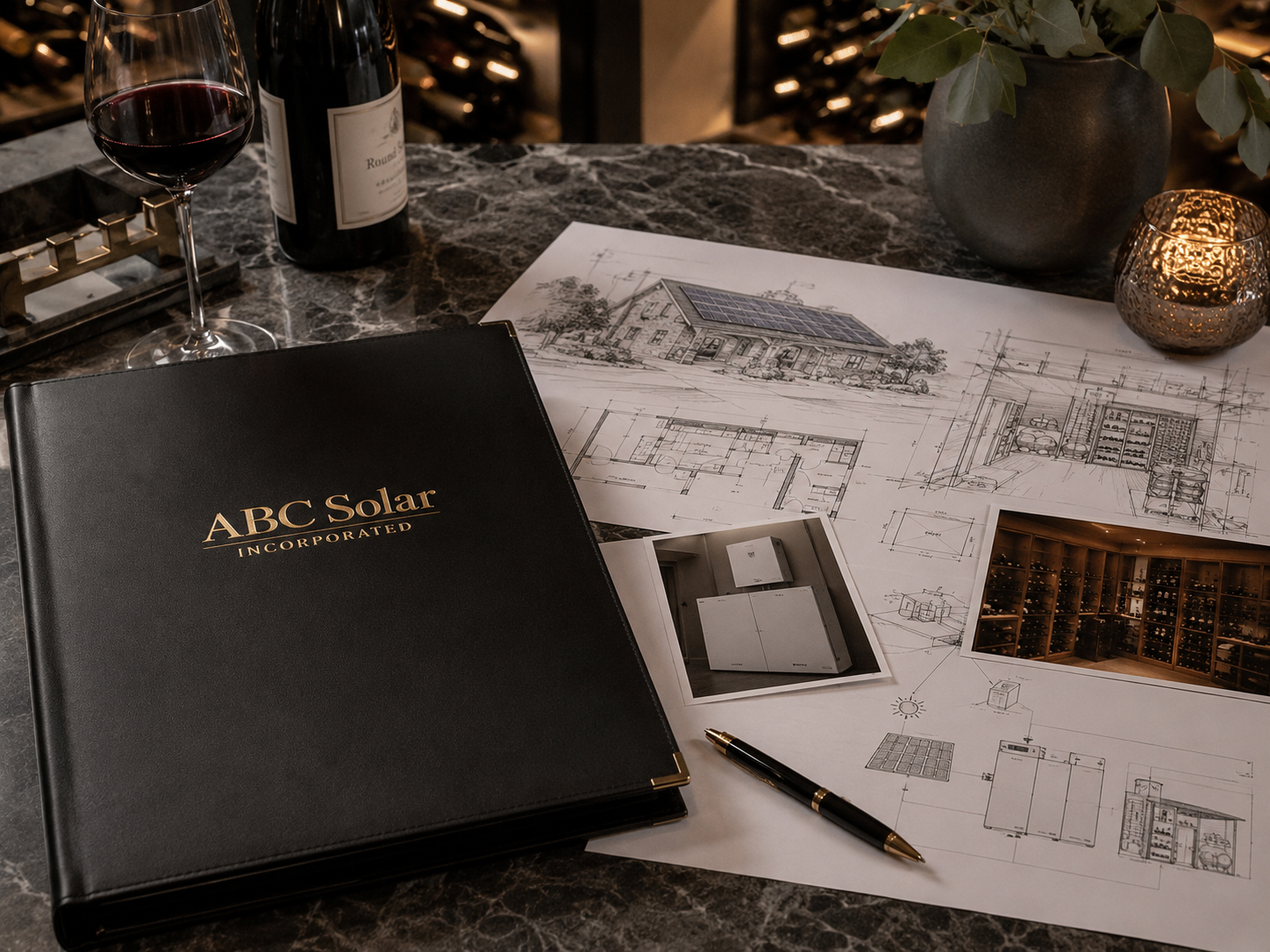
ABC Solar consultation folder and solar wine cellar design documents
Private Design Review

Choose the standard before choosing the system.

The first conversation is not “How many batteries?” The first conversation is: what needs to stay powered, and should the system be designed for most of the year or for winter?

ABC Solar Incorporated
24454 Hawthorne Blvd, Torrance, CA 90505
[email protected] · 1-310-373-3169