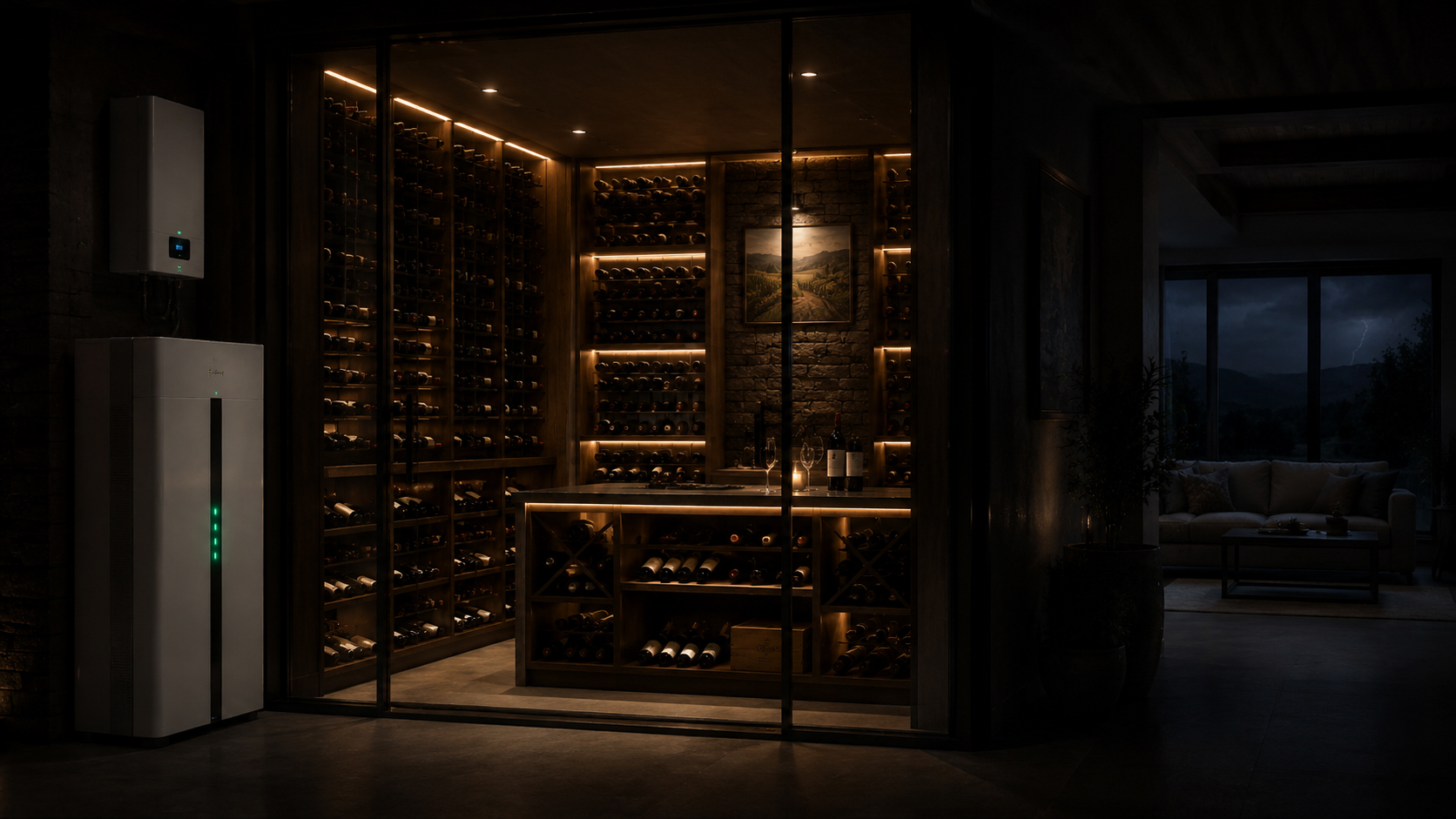
Serious answers for serious cellars.
Solar Wine Cellar is not about buying a battery and hoping. It is about protected loads, seasonal design, real equipment, monitoring, and honest expectations.
The right answer depends on the load.
A private wine room, restaurant wine wall, winery, and commercial storage facility are not the same electrical problem. Every serious answer begins with what must stay powered.
These questions are not theoretical.
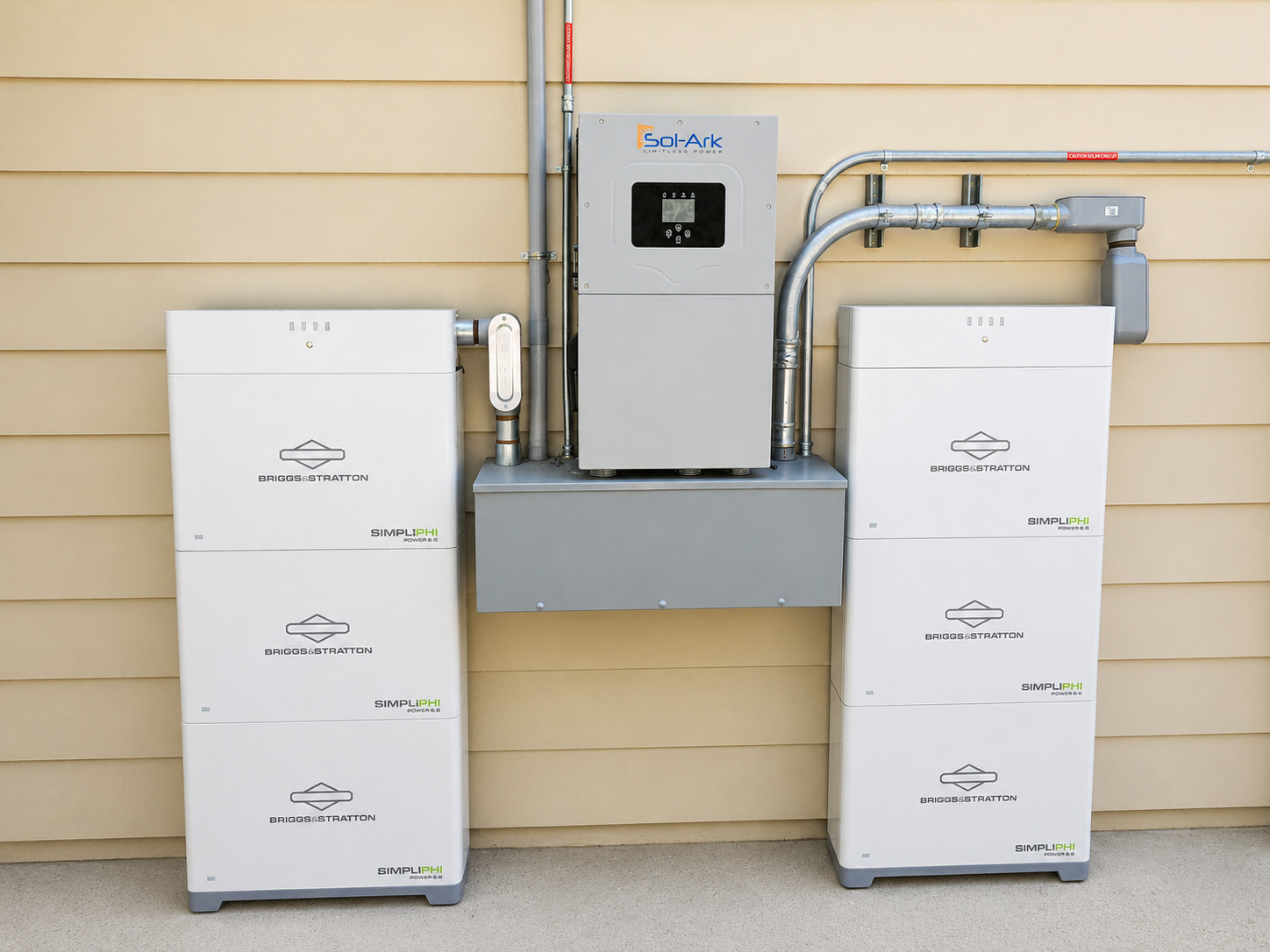
ABC Solar installs Sol-Ark inverter systems with Briggs & Stratton / SimpliPHI battery storage. The FAQ below is written from the practical reality of solar battery design: equipment, loads, runtime, monitoring, and risk.
What is Solar Wine Cellar?
The concept is simple: treat the wine cellar as a critical load, not a decorative room.
What is a Solar Wine Cellar system?
A Solar Wine Cellar system is a solar battery backup design focused on protecting wine-cellar cooling, controls, monitoring, and related critical loads. It may serve a private estate, restaurant wine wall, winery, tasting room, or climate-controlled wine storage facility.
Is this just a normal solar system?
No. A normal solar sales conversation often starts with energy offset or monthly bill reduction. Solar Wine Cellar starts with consequence: what happens to the wine if the grid fails?
The system is designed around protected loads, battery runtime, monitoring, seasonality, and the value of keeping the cellar stable.
Why focus on wine cellars?
Wine is temperature-sensitive, value-dense, and often emotionally significant. A wine cellar may hold years of collecting, restaurant inventory, winery allocation, or client storage. It deserves a more serious backup-power conversation than “plug in a battery and hope.”
Does the system guarantee wine protection?
No. A solar battery system can help protect selected loads, but it cannot guarantee wine preservation under every condition. Wine safety depends on cooling equipment, cellar construction, outside temperature, outage duration, battery capacity, solar production, controls, monitoring, and human response.
That is why the design must be honest.
Sol-Ark, Briggs & Stratton, and system architecture.
Premium equipment matters, but equipment only works when the protected-load plan is correct.
What inverter equipment does ABC Solar use for these systems?
ABC Solar uses Sol-Ark inverter systems, including the Sol-Ark 18K class for serious residential backup. For 3-phase applications, ABC Solar uses appropriate Sol-Ark architecture based on the property and load requirements.
What batteries does ABC Solar use?
ABC Solar uses Briggs & Stratton / SimpliPHI batteries. The Briggs & Stratton 6.6 module is a premium modular battery platform, useful for building battery capacity around real protected loads.
Why does surge power matter?
Some motors, compressors, HVAC equipment, and refrigeration loads require more power to start than to keep running. Surge power matters because backup systems must handle real equipment behavior, not just nameplate fantasies.
Does bigger equipment automatically mean better design?
No. Bigger equipment can still be poorly designed. The correct process is to define the loads, choose the design standard, evaluate seasonality, then size the inverter, battery, solar, backup panel, and monitoring plan.
Most of the year, or winter?
This is the defining question for Solar Wine Cellar design.
What does “design for most of the year” mean?
It means the system is designed for strong practical performance during typical outages and the months when solar production is generally better. This approach can be appropriate for customers who want meaningful protection with controlled cost and disciplined scope.
What does “design for winter” mean?
It means the system is designed more conservatively around the harder season: shorter days, lower solar production, storms, cloudy weather, and longer outage exposure. Winter design may require more solar, more battery capacity, stricter load control, or generator integration.
Is winter design always required?
No. Winter design is a premium resilience standard, not an automatic requirement. The correct standard depends on the collection value, outage risk, customer expectations, available space, budget, and whether the wine cellar is the only protected load or part of a broader property plan.
Why is winter so important?
Winter is the honest test because solar production can be lower while backup expectations may remain high. A system that feels generous during strong solar months can behave differently during short, cloudy, stormy days.
What should stay powered?
The system is defined by the loads, not by marketing language.
Can the system protect only the wine cellar?
Yes. A cellar-focused design may protect wine-cellar cooling, controls, monitoring, network equipment, and selected support circuits.
Can the system protect more than the wine cellar?
Yes. Depending on the property, the protected-load plan may include refrigeration, security, gates, selected lighting, POS systems, network equipment, limited comfort circuits, or commercial operations. Every added load affects runtime and system size.
What are the most important wine-cellar loads?
- Wine-cellar cooling equipment
- Thermostats and climate controls
- Temperature and humidity monitoring
- Router, gateway, or communication equipment
- Security or access control where needed
Can the system back up the whole house?
Possibly, but whole-home backup is a very different design than wine-cellar backup. Whole-home backup requires deeper review of service equipment, inverter capacity, battery capacity, solar production, load management, and owner expectations.
Know before the cellar gets warm.
Monitoring is the difference between having equipment and understanding whether the system is ready.
What should monitoring show?
A serious system should support visibility into solar production, battery status, backup readiness, protected loads, and wine-cellar climate conditions.
Who should receive alerts?
That depends on the project. Alerts may need to reach the homeowner, estate manager, restaurant manager, winery operator, storage-facility manager, or service team. A warning that reaches the wrong person too late is not a plan.
Can monitoring fail?
Yes. Monitoring can depend on routers, gateways, internet service, cellular service, third-party platforms, settings, and power to communication equipment. That is why network equipment may also need to be treated as a protected load.
Does monitoring replace good design?
No. Monitoring makes good design visible. It does not fix bad load selection, insufficient battery capacity, poor equipment placement, or unrealistic outage expectations.
Who is this for?
Solar Wine Cellar is for customers who understand that climate failure has consequences.
Is this for luxury homeowners?
Yes. Estate wine rooms, private cellars, kitchens, refrigeration, network equipment, security, gates, and selected critical circuits can all be part of the design conversation.
Is this for restaurants?
Yes. Restaurant wine inventory is cash on shelves. A restaurant system may include wine-room cooling, selected refrigeration, POS, network, security, and limited lighting.
Is this for wineries?
Yes. Wineries may need backup support for tasting rooms, bottle storage, wine-club inventory, refrigeration, monitoring, security, access control, and selected operations.
Is this for wine storage facilities?
Yes. Commercial wine storage facilities may need climate-controlled room support, monitoring, security, access, communications, and client-confidence planning.
How does a project begin?
The first conversation should define consequence, not equipment.
What information should I gather before contacting ABC Solar?
- Wine-cellar cooling equipment information, if known
- Approximate cellar size or bottle count
- Which loads must stay powered
- Existing solar or battery equipment, if any
- Electrical service information, if known
- Outage history or concerns
- Whether the design should be most-of-year or winter-focused
Can ABC Solar review a new construction or remodel project?
Yes. New construction and remodels are ideal times to plan wine-cellar backup power because equipment locations, service panels, conduit paths, roof space, and monitoring can be coordinated before the project is finished.
What is the fastest way to start?
Use the consultation page, email [email protected], or call 1-310-373-3169. The best first message is simple: tell ABC Solar what cannot fail.
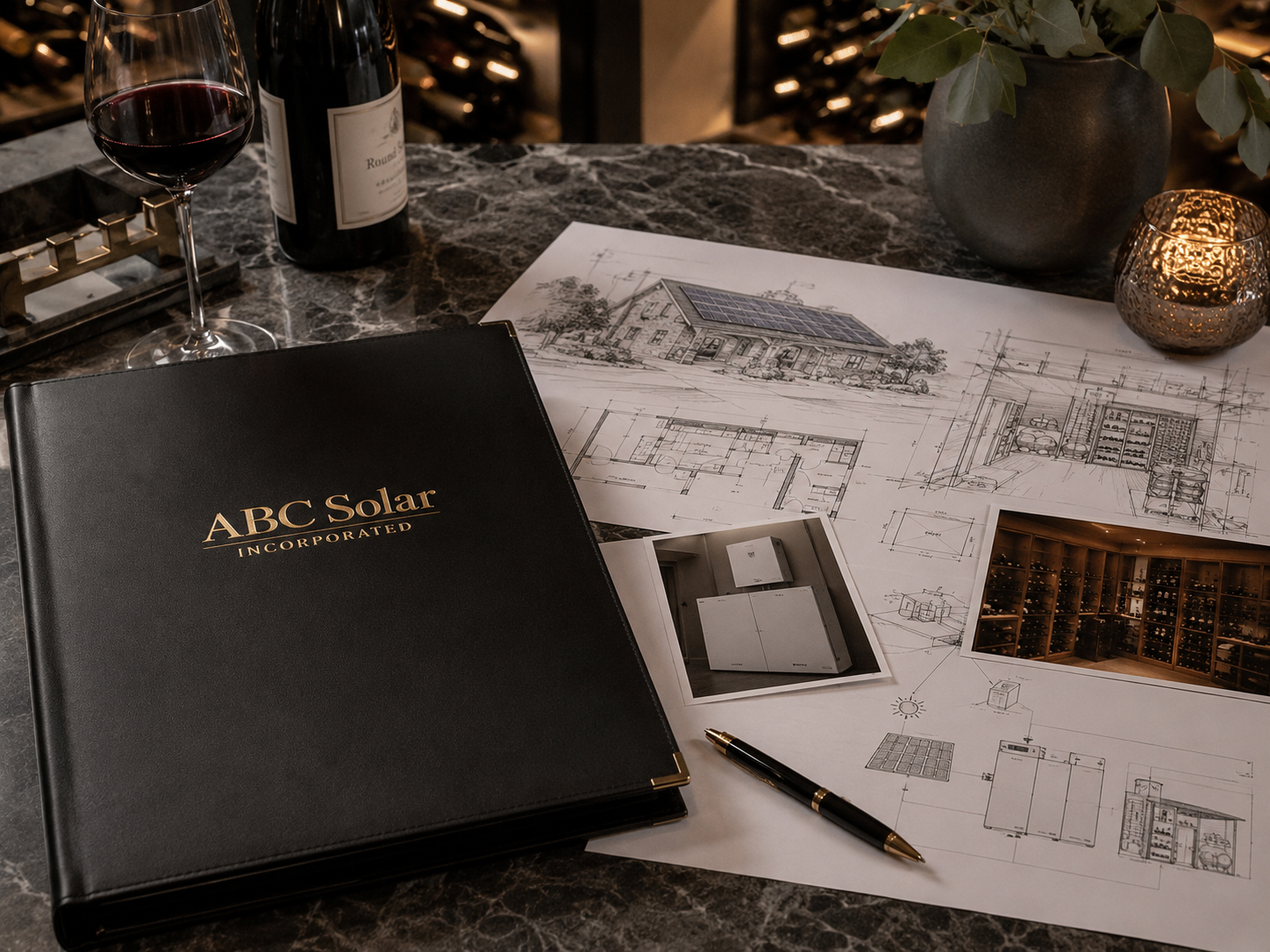
Still unsure? Start with the load.
A proper Solar Wine Cellar review begins with the wine cellar, cooling equipment, protected loads, electrical service, available solar area, battery goals, monitoring needs, and design standard: most of the year, or winter.
ABC Solar Incorporated
24454 Hawthorne Blvd, Torrance, CA 90505
[email protected] · 1-310-373-3169
Some site images are conceptual visualizations. Actual ABC Solar installations are identified as actual installations.