Cooling stops.
The cellar cooling system is often the first and most obvious protected load. Without it, the collection is exposed.
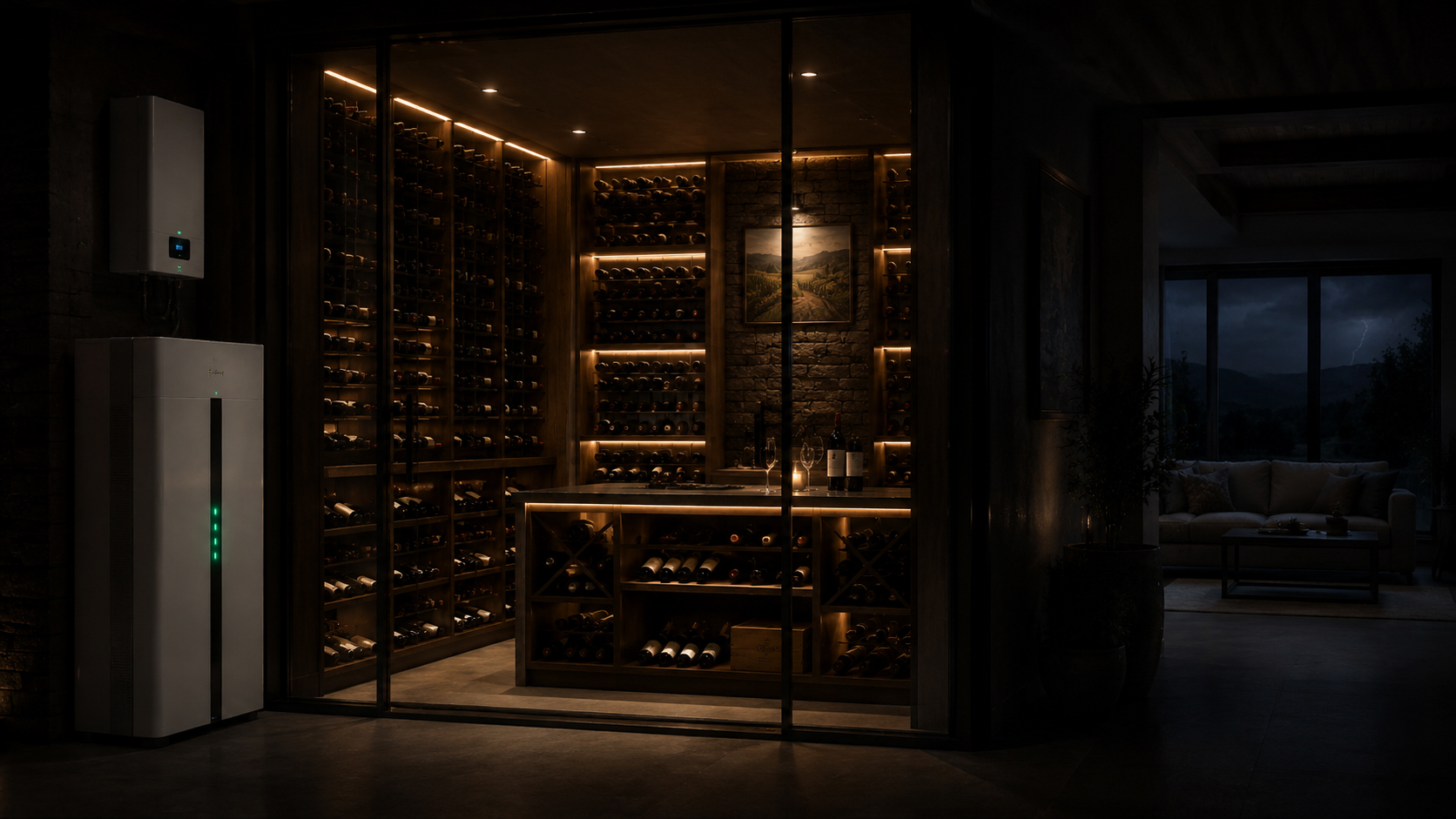
ABC Solar Incorporated designs premium solar battery systems for wine-cellar cooling, controls, monitoring, refrigeration, security, network equipment, and selected critical loads.
Heat is heat. A failed utility, a summer blackout, a planned shutoff, a storm, or an equipment problem can all become the same event inside the cellar: temperature rising while the collection waits.
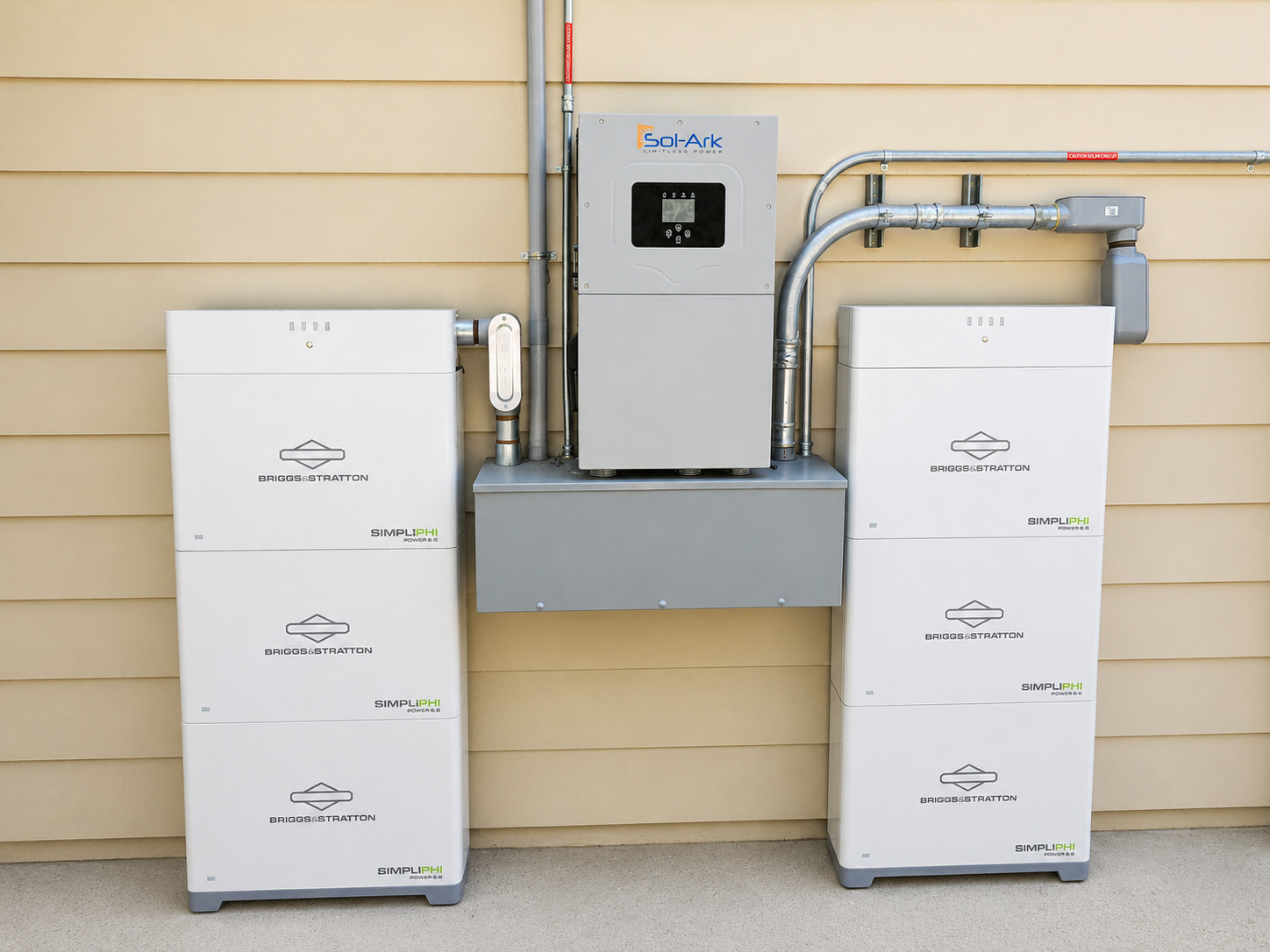
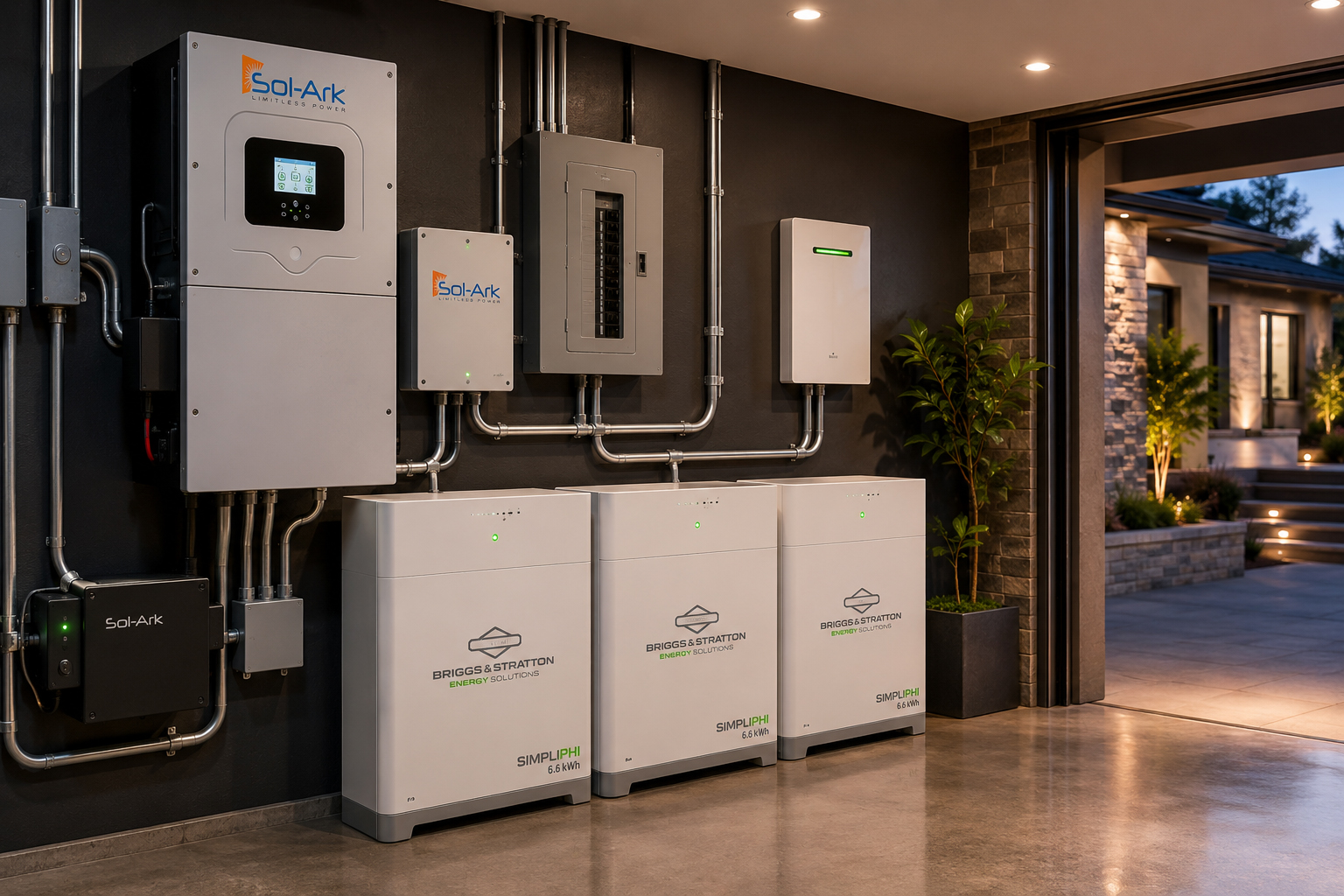
ABC Solar installs Sol-Ark inverter systems with Briggs & Stratton / SimpliPHI battery storage. Wine cellar backup power begins with the real protected loads and the customer’s tolerance for risk.
The Sol-Ark 18K-2P-LV class lists 18,000W continuous power, 36,000W 10-second surge power, stackability, and a 10-year warranty. Briggs & Stratton 6.6 battery modules list 6.65 kWh nominal capacity and stackable modular storage.
Wine cellar backup power is not about pretending the whole property can run forever. It is about deciding what must remain powered so the collection stays out of danger.
The protected-load plan may include cooling, temperature controls, monitoring, network equipment, selected refrigeration, security, lighting, gates, or other mission-critical circuits.
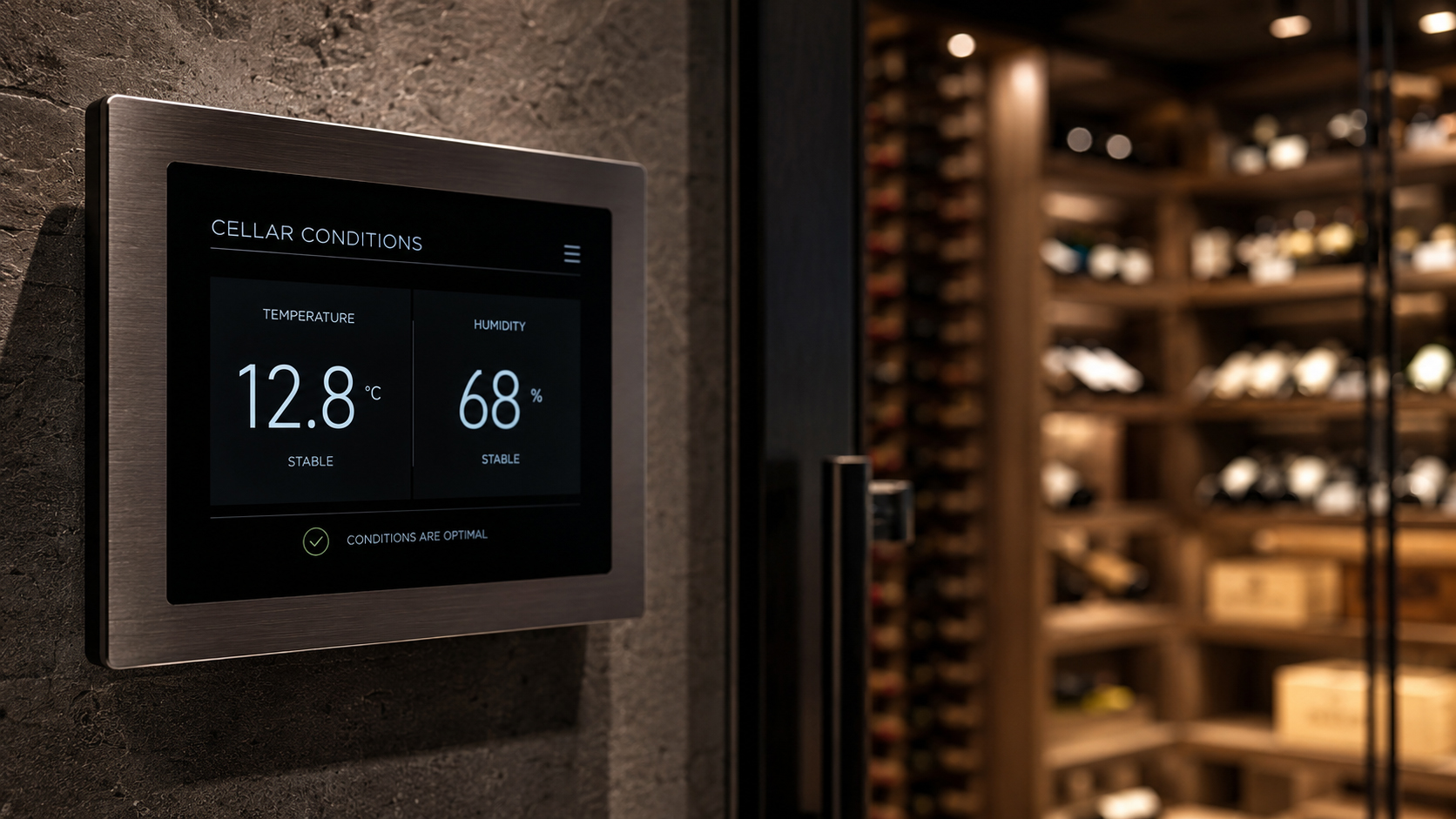
The cellar cooling system is often the first and most obvious protected load. Without it, the collection is exposed.
Thermostats, humidity controls, sensors, and control boards may need backup power to keep the system operating correctly.
If the router, gateway, or monitoring equipment loses power, the owner may not know the cellar is in trouble.
Security, access, lighting, communication, or refrigeration loads may affect how quickly the owner can respond.
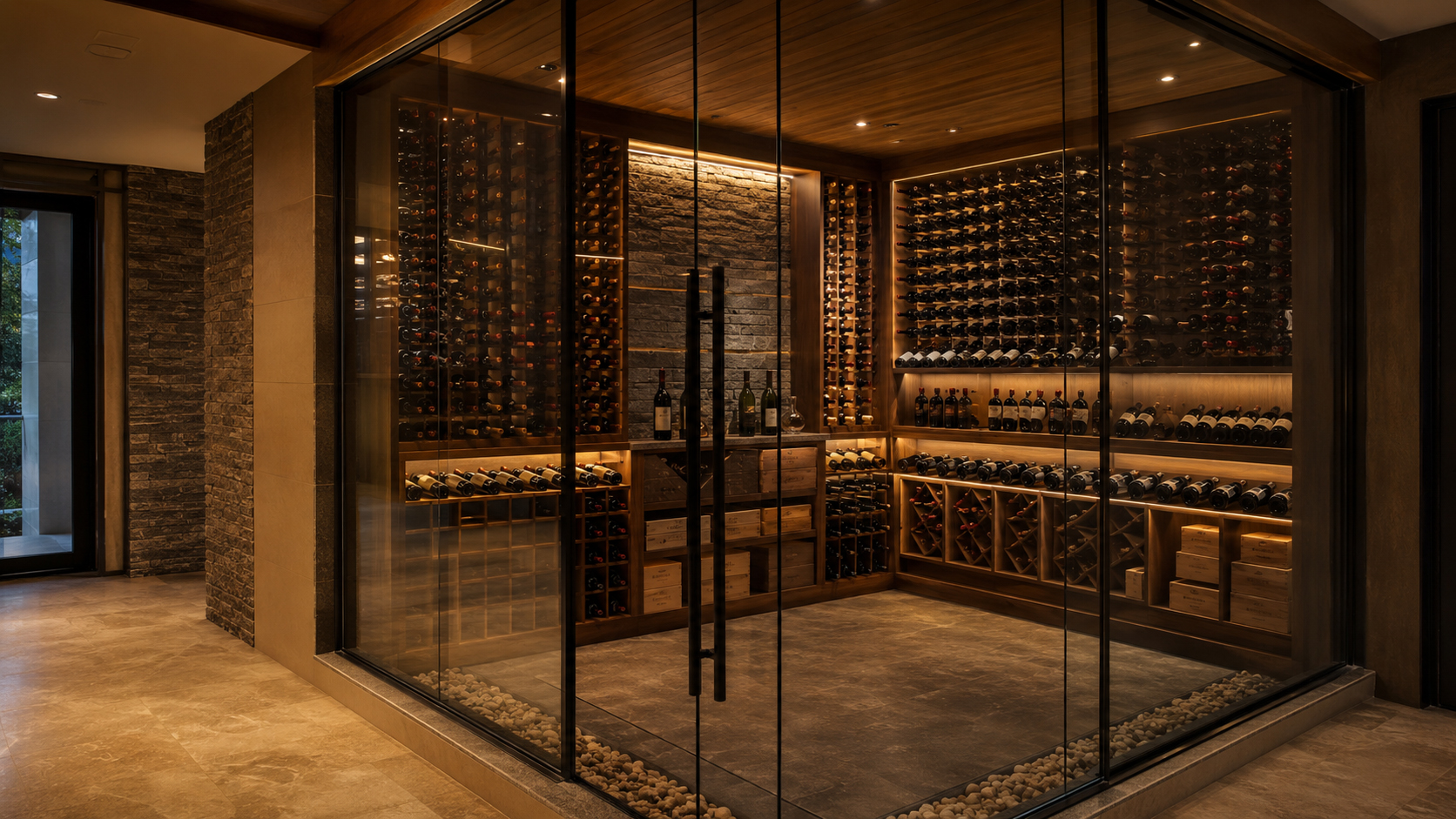
A beautiful wine room can hide a simple vulnerability: the cooling system depends on power.
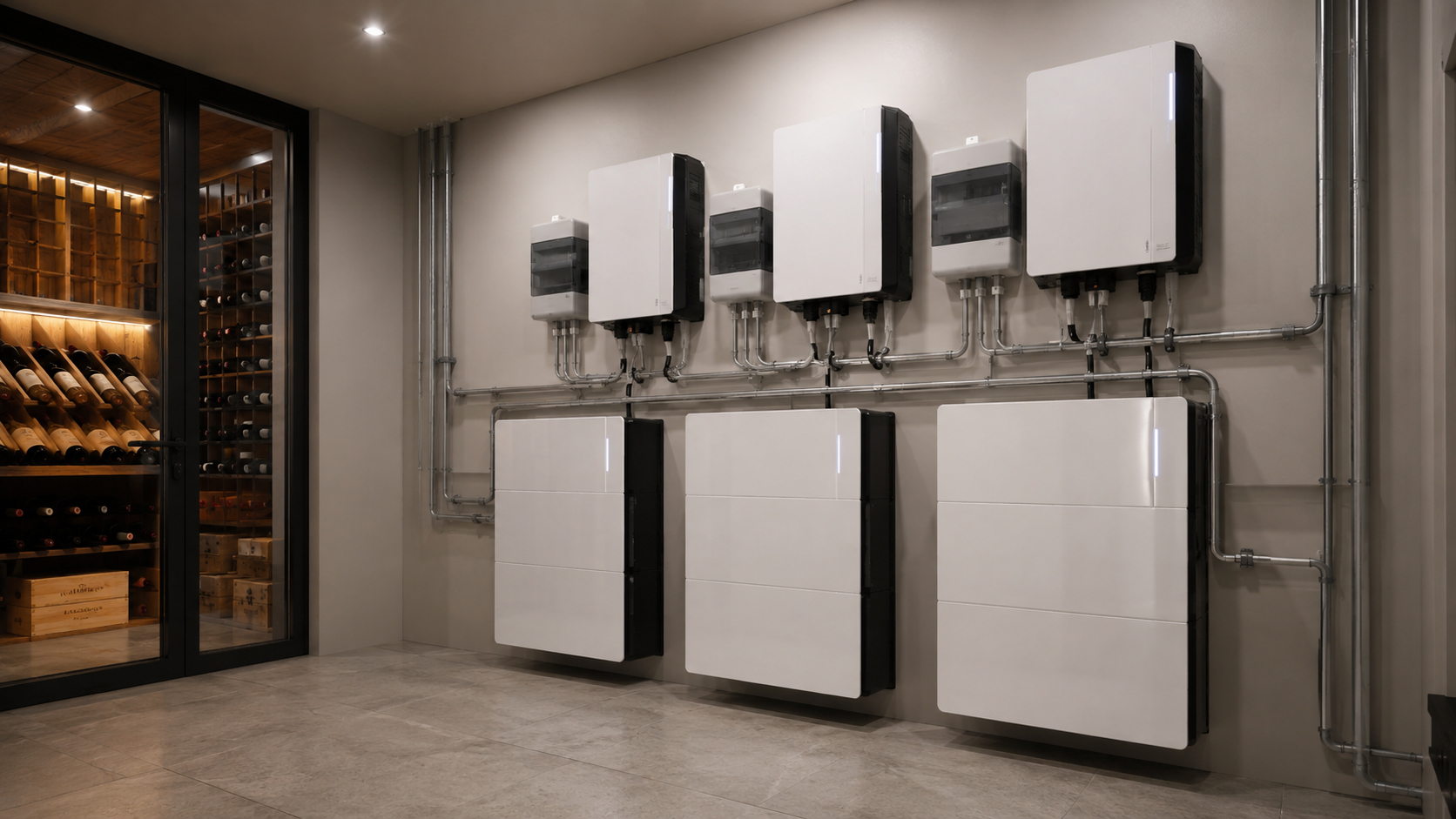
Battery capacity, inverter architecture, protected-load panels, solar recharge, monitoring, and seasonality all matter.
This is the discipline that separates a real backup plan from a battery purchase.
Cooling equipment, compressors, condensers, fans, startup behavior, and circuit requirements must be reviewed.
Thermostats, humidity controls, sensors, relays, and control equipment may belong on protected power.
Battery status, solar production, temperature alerts, and communication hardware support fast decisions.
Routers, gateways, Wi-Fi, cellular communication, and monitoring devices need power if alerts matter.
Access control, gates, cameras, alarms, selected lighting, and locks may be critical for high-value collections.
Restaurants, estates, wineries, and storage facilities may need selected refrigeration included in the plan.
A battery that feels generous in summer may feel very different during a winter outage. ABC Solar starts with the honest seasonal design question.
A practical design path for typical outages and stronger solar months. Strong protection with disciplined scope.
A premium resilience standard for shorter days, lower solar production, storms, and longer outage exposure.
Backup power without visibility is not enough. For serious wine protection, monitoring should support solar production, battery status, backup readiness, and cellar conditions.
The goal is simple: know the system is ready before the emergency begins.
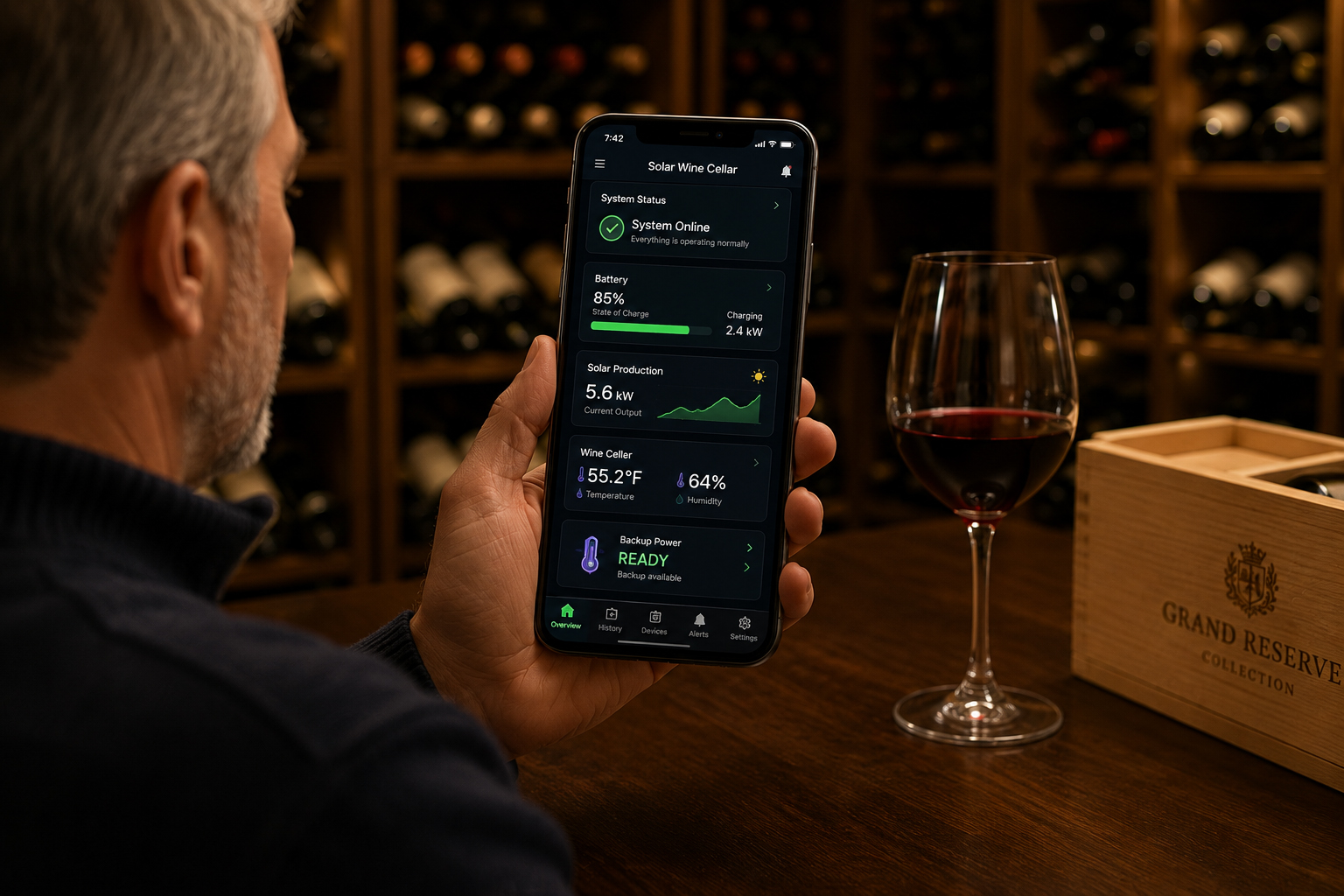
Know what stored energy is available and what the system is doing during grid events.
Temperature awareness matters because the cellar’s climate is the real scoreboard.
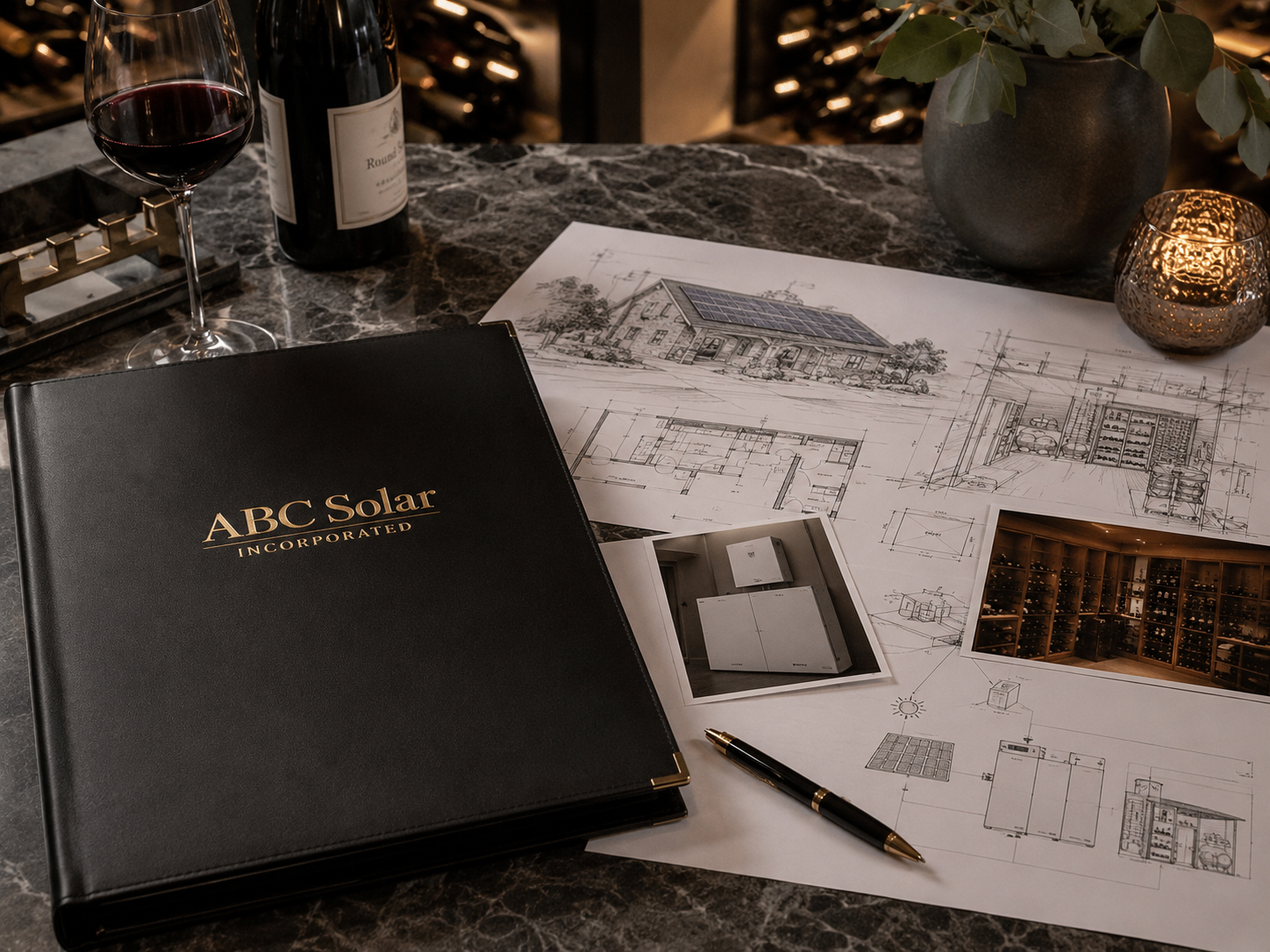
Good backup design includes what happens next: who knows, who responds, and what stays powered.
Some site images are conceptual visualizations. Actual ABC Solar installations are identified as actual installations.
A proper wine-cellar backup review begins with the cooling equipment, protected loads, electrical service, solar area, battery goals, monitoring needs, and design standard: most of the year, or winter.
ABC Solar Incorporated
24454 Hawthorne Blvd, Torrance, CA 90505
[email protected] · 1-310-373-3169