Solar Production
Is the solar array producing? Is it helping support loads or recharge batteries during daylight?
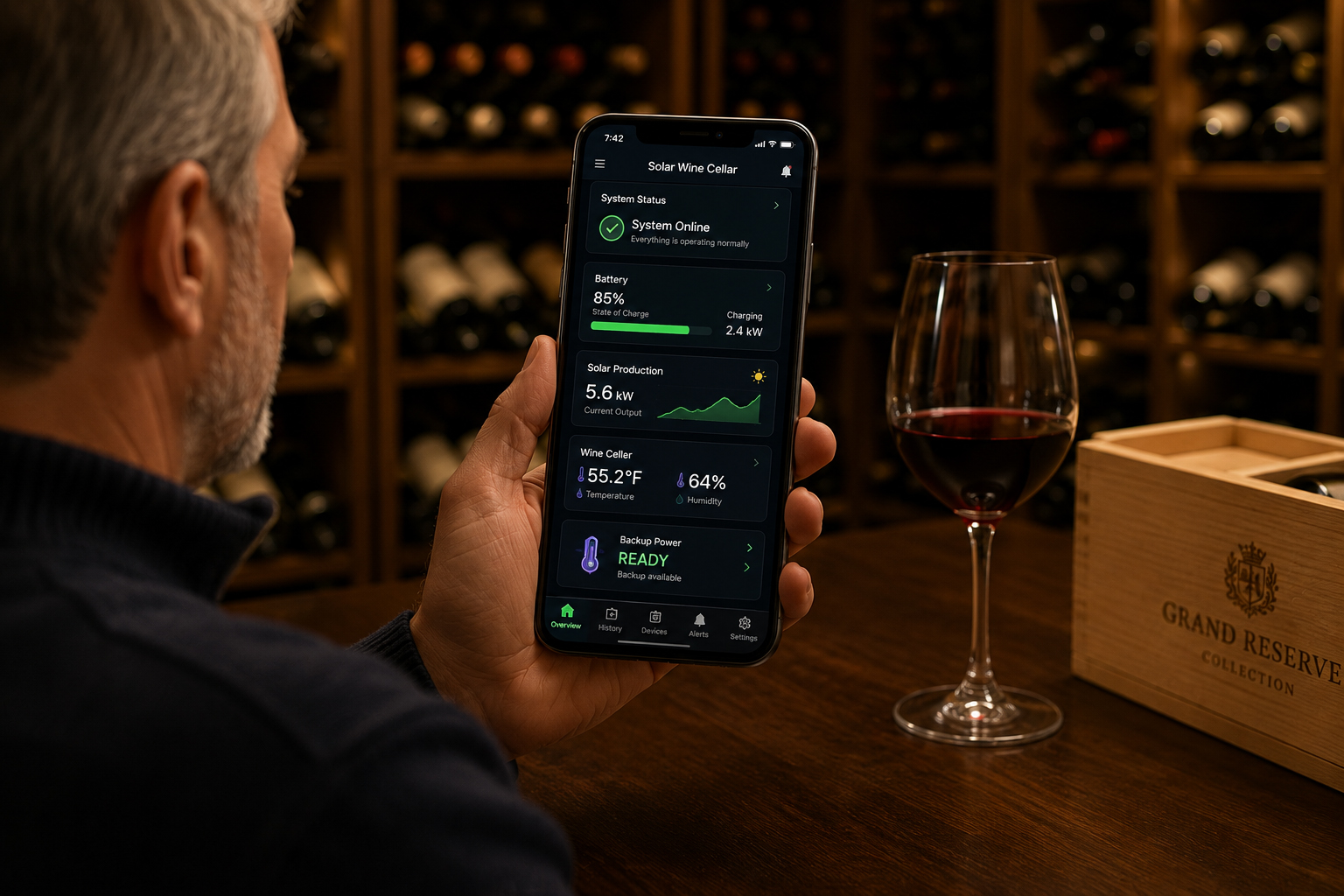
Monitoring turns backup power into visible confidence: solar production, battery status, backup readiness, wine-cellar temperature, protected loads, and alert responsibility.
A premium solar battery system should not be mysterious. The owner, estate manager, restaurant operator, winery manager, or storage-facility team should know what is happening before the wine is exposed.
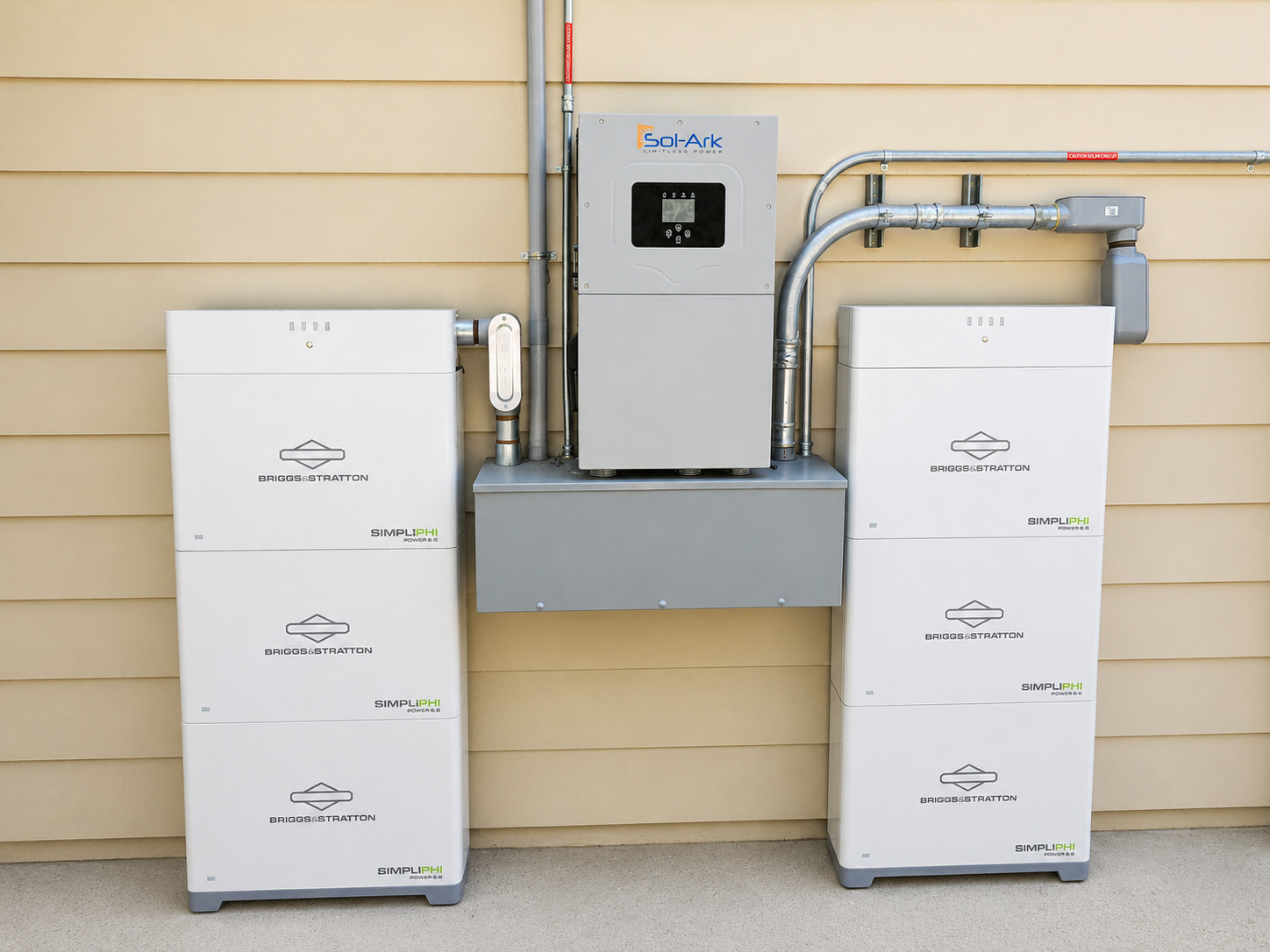
ABC Solar installs Sol-Ark inverter systems with Briggs & Stratton / SimpliPHI battery storage. The monitoring conversation begins after the design conversation: what loads are protected, how the system is expected to behave, and who needs to know.
A dashboard does not replace engineering. It makes the engineering visible.
Monitoring should not bury the owner in meaningless data. It should answer the urgent questions: is the solar producing, is the battery charged, are the protected loads online, is the cellar temperature stable, and who needs to respond?
The best monitoring plan is simple enough to use during stress and serious enough to support real decisions.
Is the solar array producing? Is it helping support loads or recharge batteries during daylight?
What is the state of charge? Is the battery reserved, charging, discharging, or depleted?
Are the protected loads ready to operate when the grid fails?
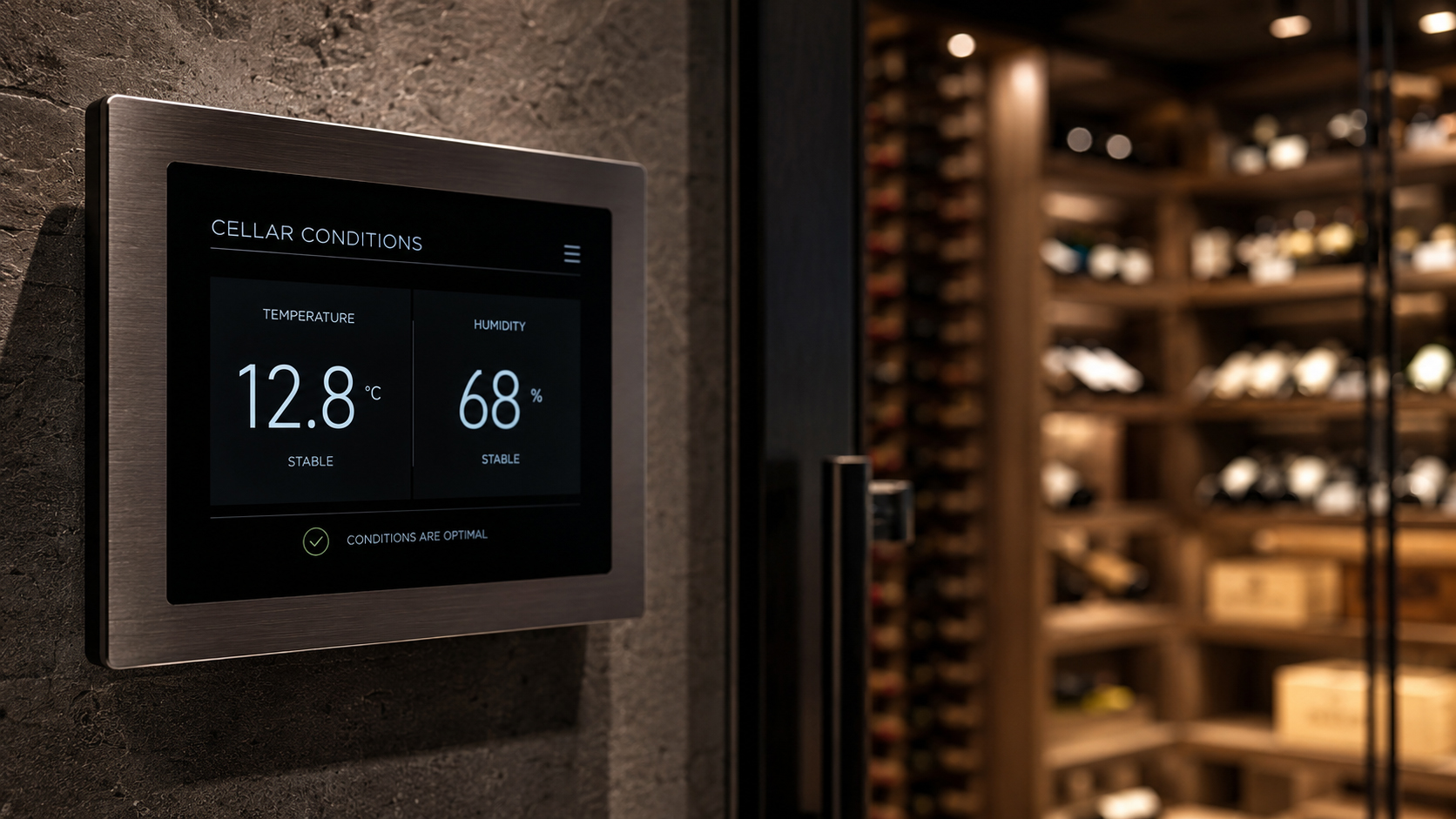
The wine cellar temperature is the real scoreboard. The system exists to protect climate.
If the router or gateway fails, alerts and visibility may disappear when they are needed most.
The owner should understand which circuits are protected and which circuits are not.
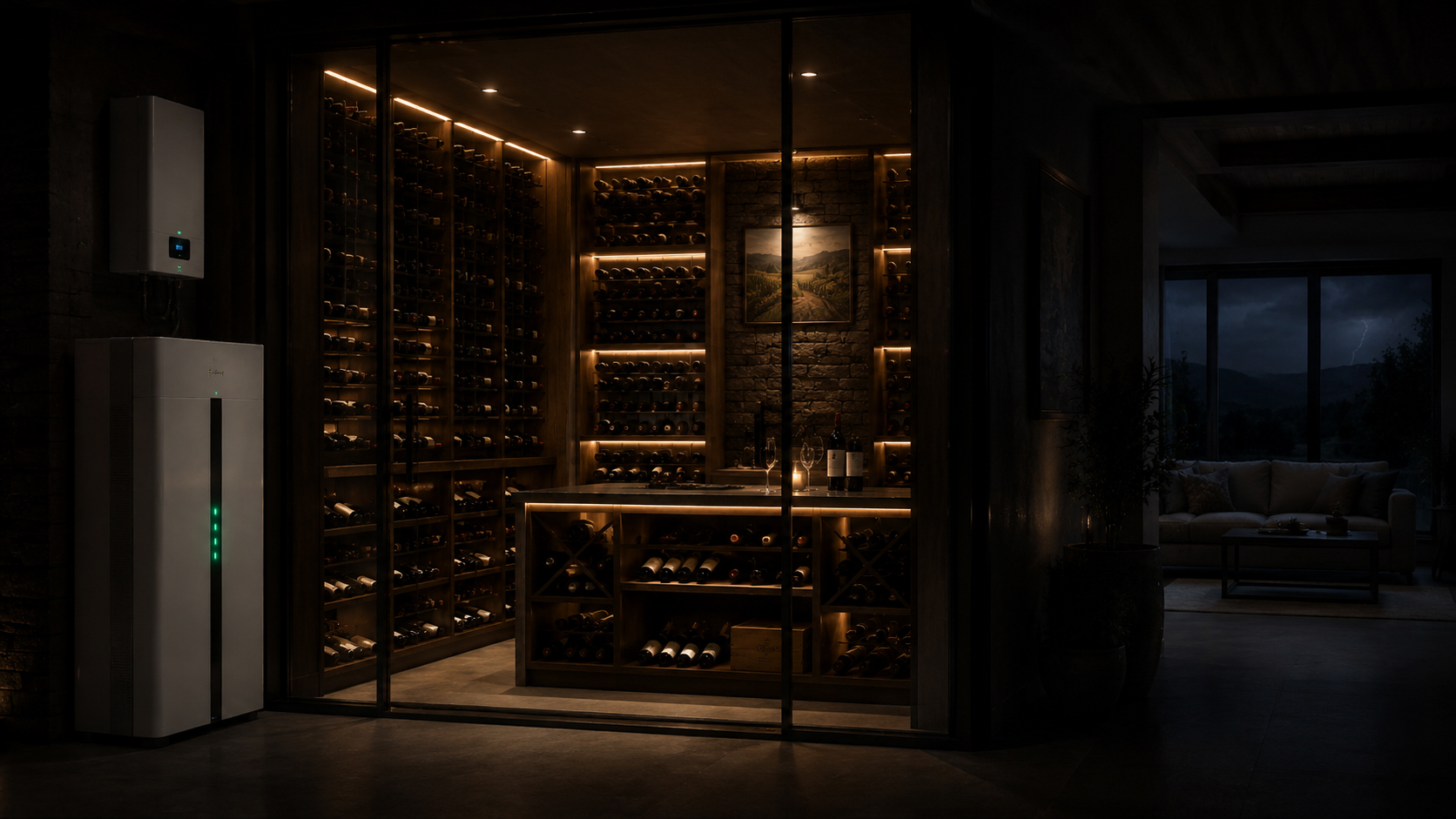
Monitoring tells the owner whether the battery is carrying the protected loads and whether the cellar remains stable.
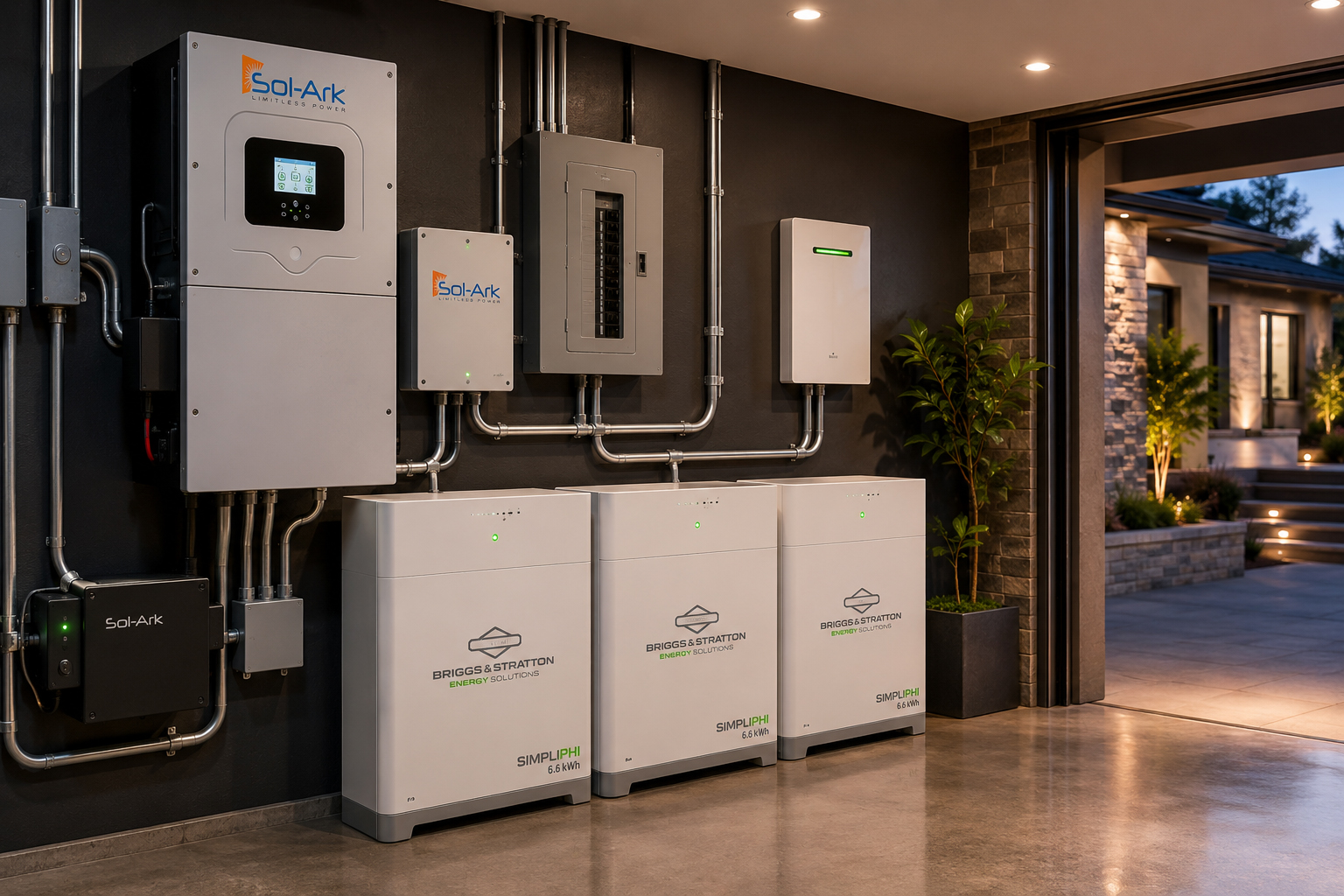
The best monitoring value appears before trouble: battery charge, system health, solar behavior, and maintenance signals.
An alert that reaches no one useful is just noise. ABC Solar treats monitoring as a responsibility plan, not a phone decoration.
The grid fails, the system transfers, and the protected-load plan begins.
The battery approaches a threshold that requires load reduction, generator support, or action.
The cellar temperature begins moving outside the safe operating range.
The system, gateway, router, or monitoring path stops reporting when visibility matters.
The inverter, battery, or connected device reports an issue that should be reviewed.
Premium backup deserves periodic review so the system is not forgotten until the outage.
Lower solar production may change runtime expectations during the hardest season.
The alert plan should identify who responds: owner, manager, staff, estate manager, or service team.
The monitoring experience should match the project. A private collector may want quiet confidence. A restaurant may need manager alerts. A winery may need operations visibility. A storage facility may need documentation and response protocols.
The point is not more data. The point is better decisions.
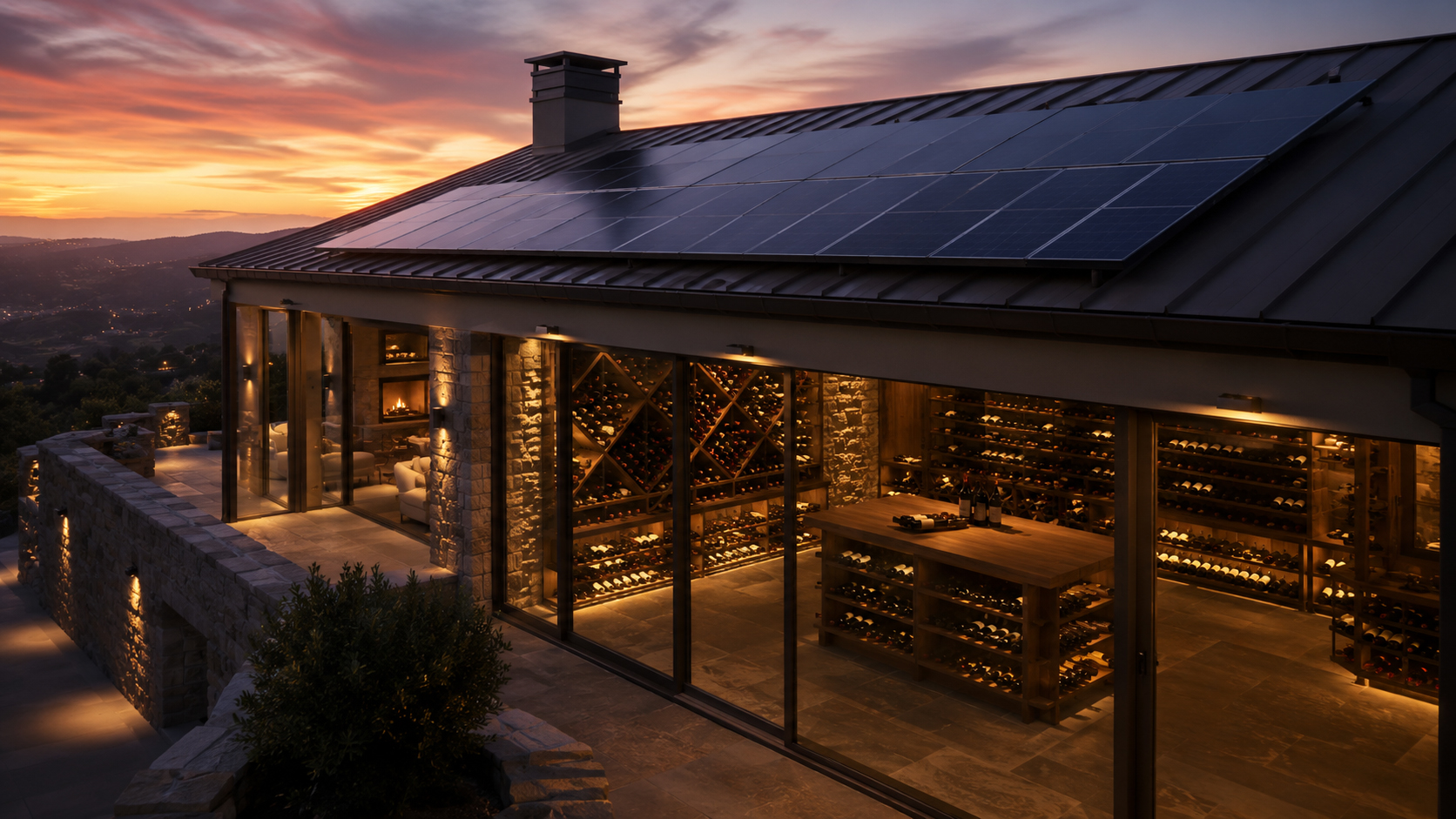
Owner and estate-manager confidence for cellar climate, battery readiness, network, and selected critical loads.
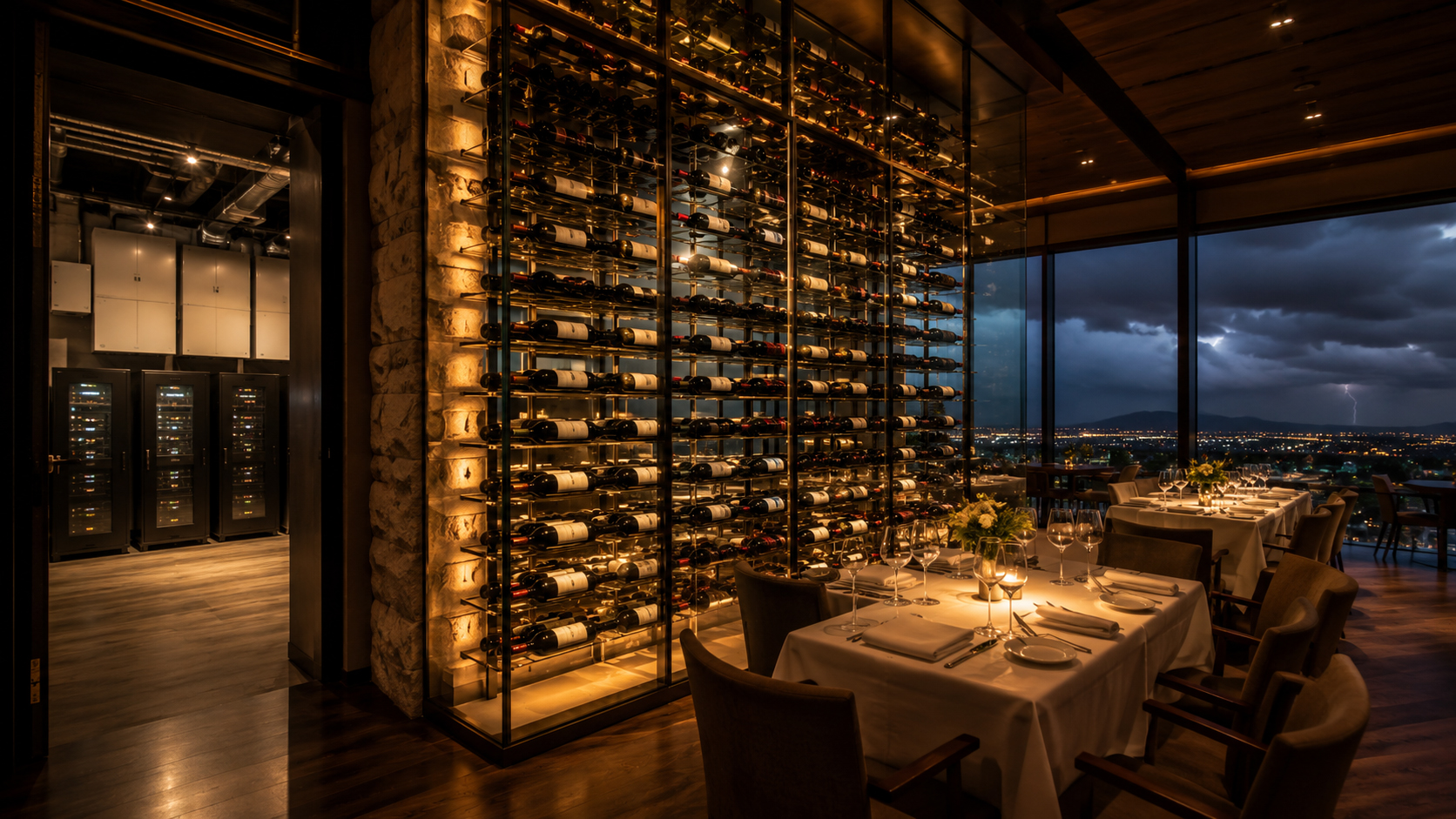
Manager visibility for wine inventory, refrigeration, POS, security, and outage response.
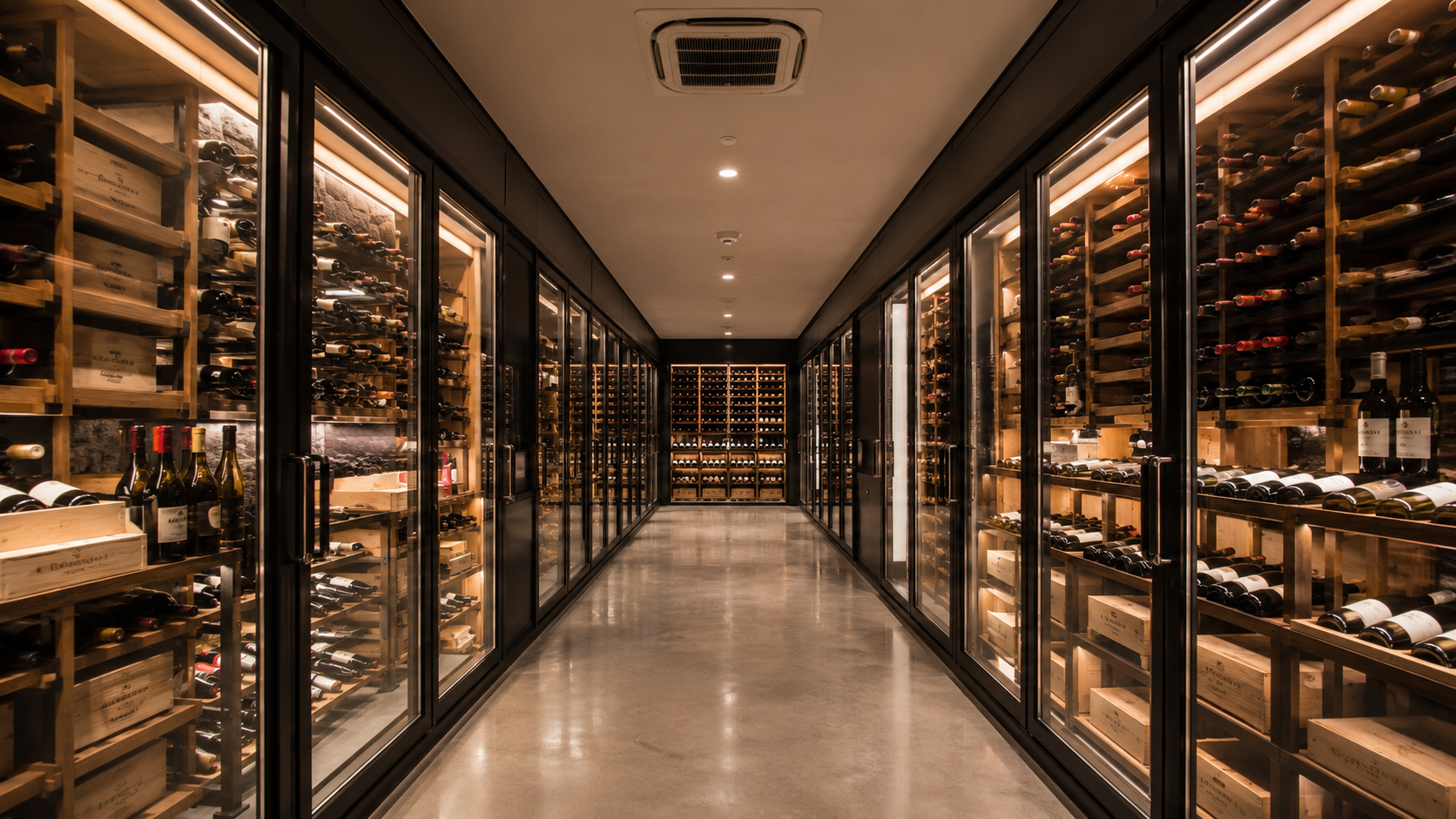
Operational monitoring for climate-controlled rooms, access, security, communications, and client confidence.
Some site images are conceptual visualizations. Actual ABC Solar installations are identified as actual installations.
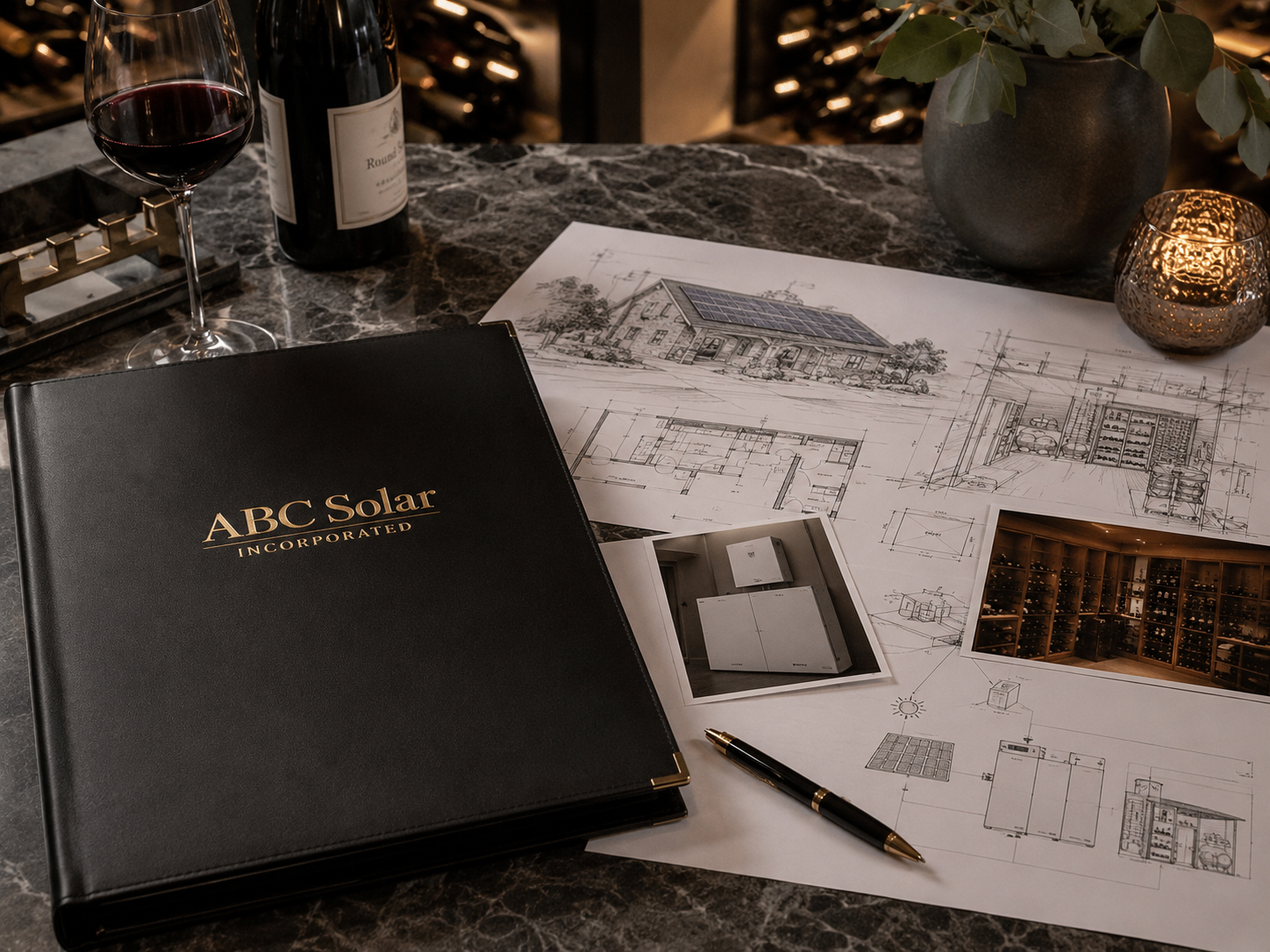
A proper monitoring review begins with the protected loads, the wine-cellar temperature goal, the inverter and battery architecture, the network path, the people responsible for response, and the seasonal design standard.
ABC Solar Incorporated
24454 Hawthorne Blvd, Torrance, CA 90505
[email protected] · 1-310-373-3169